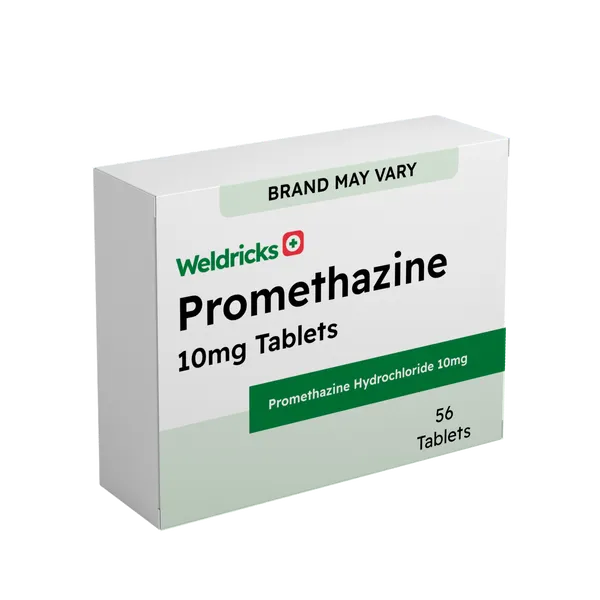
Important Warnings and Precautions for Promethazine Hydrochloride 10mg Tablets
Read all of this leaflet carefully before you start taking this medicine, as it contains important information for you. Do not take Promethazine Hydrochloride 10mg Tablets if:
- The person taking this medicine is under 5 years of age.
- You are allergic (hypersensitive) to promethazine hydrochloride or any of the other ingredients of this medicine (listed in section 6). Signs of an allergic reaction include: a rash, swallowing or breathing problems, swelling of your lips, face, throat or tongue.
- You are taking a medicine for depression called a monoamine oxidase inhibitor (MAOI). Also, do not take promethazine if you have stopped taking one of these MAOI medicines within the last 14 days.
- The person taking this medicine is unconscious (in a coma) or suffers from severe dizziness, drowsiness or headache.
Do not take this medicine if any of the above applies to you. If you are not sure, talk to your doctor or pharmacist before taking Promethazine.
Talk to your doctor or pharmacist before taking Promethazine if you:
- Have difficulty breathing, wheezing, tightness in the chest (asthma) or an infection in your lungs (bronchitis).
- Have epilepsy.
- Have any serious heart problems.
- You have any personal or family history of heart disease.
- You have irregular heartbeat.
- Have liver or kidney problems.
- Have a stomach blockage or difficulty passing water (urine).
- Have hearing problems.
- Have increased pressure in the eye (narrow angle glaucoma).
- Have suffered from Reye's Syndrome or you have signs of Reye's Syndrome, such as being sick and confused after a viral illness.
- Phenothiazine derivatives may potentiate QT interval prolongation which increases the risk of onset of serious ventricular arrhythmias of the torsade de pointes type, which is potentially fatal (sudden death). QT prolongation is exacerbated, in particular, in the presence of bradycardia, hypokalaemia, and acquired (i.e., drug-induced) QT prolongation.
Exposure to Sunlight
Promethazine can make your skin more sensitive to sunlight. Keep out of direct sunlight while taking this medicine.
Tests
Taking Promethazine may affect the results of certain tests. These include some pregnancy tests and skin tests. Promethazine should not be taken at least 3 days before the start of a skin test.
If you are not sure if any of the above apply to you, talk to your doctor or pharmacist before taking Promethazine.
Other Medicines and Promethazine
Tell your doctor or pharmacist if you are taking, have recently taken or might take any other medicines. This includes medicines bought without a prescription, including herbal medicines. This is because Promethazine can affect the way some medicines work, and some medicines can affect the way Promethazine works.
Special caution is required when promethazine is used concurrently with drugs known to cause QT prolongation (such as antiarrhythmics, antimicrobials, antidepressants, antipsychotics) to avoid exacerbation of risk of QT prolongation.
In particular, do not take this medicine, and tell your doctor, if you are taking or have taken the following in the last 2 weeks:
- Some medicines for depression called monoamine oxidase inhibitors (MAOIs). If you are not sure, ask your doctor or pharmacist.
Also tell your doctor or pharmacist if you are taking, have recently taken or might take any of the following:
- Anticholinergic medicines, this includes some medicines used for irritable bowel syndrome, asthma or weak bladder. These can increase the risk of dizziness, dry mouth and blurred eyesight.
- Medicines for mental health problems (antipsychotics such as haloperidol and quetiapine) or depression (antidepressants such as amitriptyline and citalopram).
- Medicines to help you to sleep or feel more relaxed (such as diazepam or zolpidem).
- Medicines such as aspirin (for arthritis and pain in your joints). Promethazine may hide the side effects of these medicines.
- Medicines for the treatment of irregular heartbeats (antiarrhythmics such as quinidine and amiodarone).
- Antimicrobials (such as erythromycin and levofloxacin) for the treatment of infections.
- Medicines that can affect your heart rhythm.
Promethazine with Alcohol
Do not drink alcohol while you are taking Promethazine. This is because it can affect the way the medicine works.
Pregnancy and Breast-feeding
If you are pregnant or breast-feeding, think you may be pregnant or are planning to have a baby, ask your doctor or pharmacist for advice before taking this medicine. Promethazine should not be taken 2 weeks before birth. You should not take Promethazine if you are breast-feeding. This is because small amounts may pass into the mother's milk. This could be harmful to your baby. If you are breast-feeding or planning to breast-feed, talk to your doctor or pharmacist before taking any medicine.
Driving and Using Machines
You may feel drowsy or sleepy after taking this medicine or in the morning after taking this medicine. If this happens, do not drive or use any tools or machines.
Promethazine contains Lactose and Sucrose
This medicine contains lactose and sucrose (types of sugars). If you have been told by your doctor that you have an intolerance to some sugars, contact your doctor or pharmacist before taking this medicinal product.