We offer a large range of hayfever nasal sprays, meaning it can be tricky getting the right one for your individual symptoms first time. To narrow it down, our experts have shared some of the best hayfever nasal sprays for targeted issues.
-
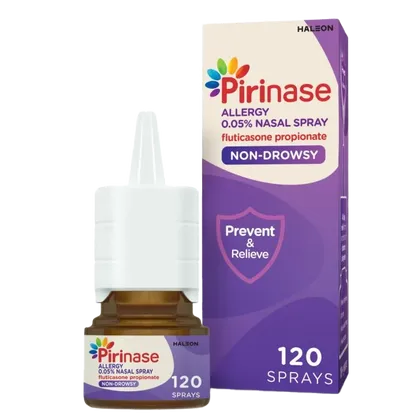
Pirinase Hayfever Nasal Spray: The active ingredient in this hay fever nasal spray is fluticasone propionate (50 micrograms in each spray). Fluticasone is a corticosteroid that controls nasal inflammation, helping to relieve symptoms caused by airborne allergens. This nasal spray provides up to 24-hour relief from common allergy symptoms, such as sneezing, itchy nose and nasal congestion. It works effectively when used regularly and can control symptoms for most people.
-
Beconase Hayfever Nasal Sprays: The active ingredient in Beconase hayfever nasal spray is beclometasone dipropionate (50 micrograms in each spray). Beclometasone dipropionate is a steroid that reduces nasal inflammation, easing hay fever symptoms like congestion and sneezing. This nasal spray for allergies provides continuous relief day and night and helps prevent hay fever symptoms. It is most effective in treating major symptoms such as a blocked or runny nose, itching and sneezing.
-
Benadryl Benacort Nasal Spray: The active ingredient in this hayfever nasal spray is budesonide (64 micrograms in each spray). Budesonide is a steroid that reduces inflammation in the nasal passages, easing symptoms like sneezing, runny nose, and congestion. This hayfever nasal spray is effective for treating hay fever and perennial rhinitis, providing relief from symptoms over time. It requires consistent use, with full effectiveness taking 2-3 days to build up.
All three nasal sprays are effective for relieving hay fever and allergy symptoms but vary slightly in active ingredients, dosage recommendations and onset of action. If your allergies are severe, your GP or online doctor can work with you to offer a tailored hay fever treatment plan.
It is not recommended to use multiple types of nasal sprays together or at the same time. If you find that no over-the-counter nasal sprays are relieving your symptoms, you should visit your GP who can identify the underlying cause of your allergies and offer tailored treatment.
Each type of hayfever nasal spray has its own set of potential side effects. You should always read the label to be aware of these or consult your GP for advice on the best option for your allergies.
Hayfever nasal sprays can be preferred over taking tablets as they are a more targeted treatment that treats the area of your body suffering from symptoms, as opposed to tablets that treat your entire body. Despite this, allergy and hayfever nasal sprays are not advised for those with sore nasal passages or damaged nasal passages as they can make these conditions worse. They may also not be suitable for some with certain medical conditions. Always read the box and leaflet provided before use. If you are unsure whether you should use a certain nasal spray, always consult a pharmacist or your GP.
Hayfever nasal sprays work by reducing inflammation inside the nasal passages caused by allergens such as pollen, dust, or pet dander. Most hayfever sprays contain corticosteroids or antihistamines that calm the immune response, reducing swelling, mucus production, and irritation. This helps relieve symptoms like a blocked nose, sneezing, and nasal itching. Steroid nasal sprays usually work best when used consistently and may take a few days to reach full effectiveness.
![What Are the Different Types of Pollen Allergies? [Guide]](https://d2i5j94z9qxt5a.cloudfront.net/eyJidWNrZXQiOiJ3ZWxkcmlja3MtY2RuIiwia2V5IjoiZ3VpZGVzLzUxNC9UWGV6ZVQzZVFUSk52N3FFMXRxZG1KS3lkYmZYaEtMU1gzckxBS0xRLmpwZyIsImVkaXRzIjp7InJlc2l6ZSI6eyJ3aWR0aCI6NDYwLCJoZWlnaHQiOjIxNSwiZml0IjoiY292ZXIiLCJiYWNrZ3JvdW5kIjp7InIiOjI1NSwiZyI6MjU1LCJiIjoyNTUsImFscGhhIjowfX0sIndlYnAiOnsicXVhbGl0eSI6ODB9fX0=)