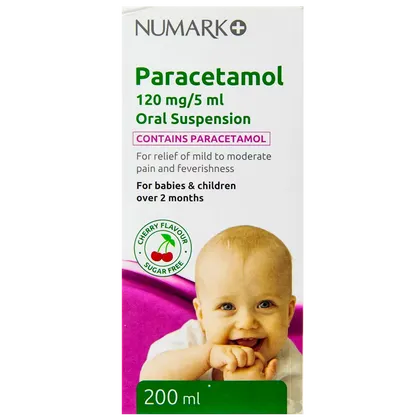
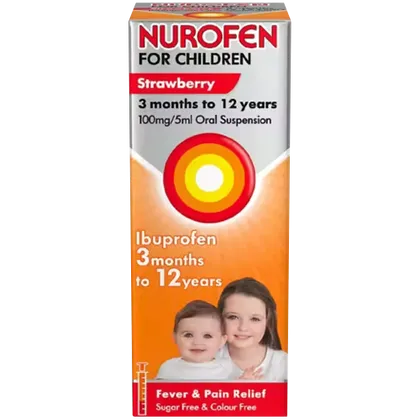
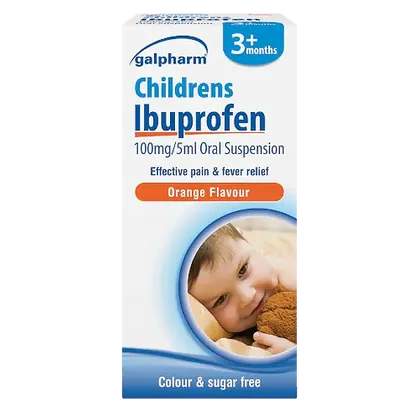
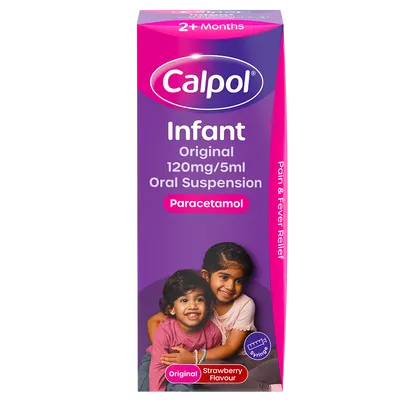
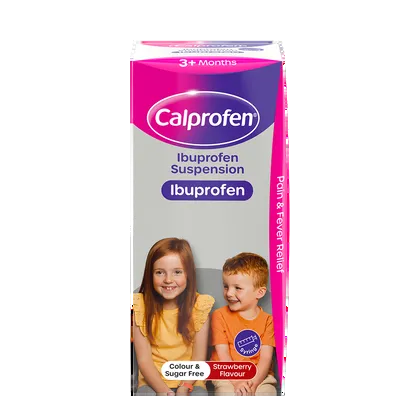
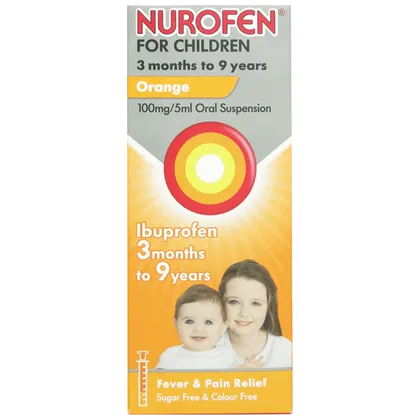
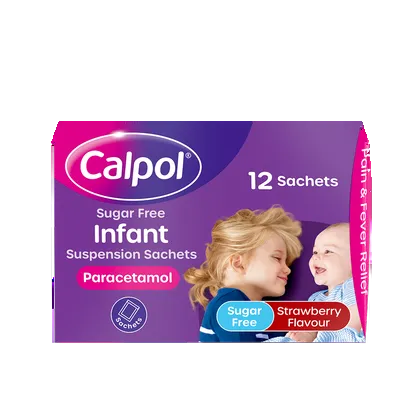
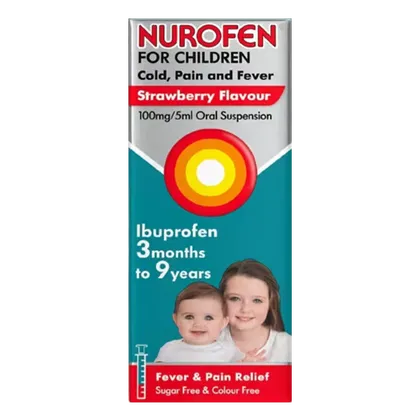
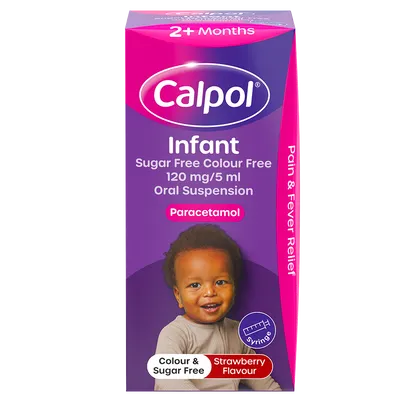
Both paracetamol and ibuprofen can help relieve fever and pain in babies. Paracetamol is generally considered safer and is usually suitable from 2 months old and at least 4kg in weight (and not premature), while ibuprofen is usually suitable from 3 months and at least 5kg in weight. Ibuprofen also has anti-inflammatory properties which can make it more effective for certain kinds of pain.
Always follow dosage instructions and check age restrictions, if you are unsure consult your local pharmacist or your GP.
Do not give both at the same time without medical advice.
Most sore throats are caused by viral illnesses such as colds or the flu and should clear up in a day or 2.
To help make them more comfortable focus on keeping them hydrated with either formula or breast milk, and you can give them either paracetamol suspension from 2 months, or ibuprofen from 3 months to help reduce the pain. Never give a baby under 12 months old any honey based remedies due to the risk of botulism.
Always follow the dosage, age and weight restrictions before giving your baby any medicine, if you need guidance speak to your pharmacist or GP.
See a GP or ring 111 if your child has a sore throat for more than 3 days, a high temperature (or feels hot, cold or shivery) and is generally unwell.
Go to A&E or call 999 immediately if they're unable to swallow fluids or saliva or have any difficulty breathing, as they'll need urgent treatment in hospital.
While most baby coughs are due to common colds, seek medical advice if your baby is under 3 months old, has a high fever, difficulty breathing, a persistent cough that doesn't improve, or if they appear unwell. Always trust your instincts as a parent and ring your GP surgery or dial 111 if you're worried.
If your child has any of the following:
- Is going blue around the lips
- Has pauses in their breathing (apnoeas) or has an irregular breathing pattern or starts grunting
- A harsh breath noise as they breathe in (stridor) present all of the time (even when they are not upset)
- Too breathless to feed (eat or drink) or talk/make noise
- Becomes pale, mottled and feels abnormally cold to touch
- Becomes extremely agitated (crying inconsolably despite distraction), confused or very lethargic (difficult to wake)
- Develops a rash that does not disappear with pressure (the ‘Glass Test’)
- Is under 3 months of age with a temperature of 38°C / 100.4°F or above (unless fever in the 48 hours following vaccinations and no other red or amber features)
|
You need urgent help
Go to the nearest Hospital Emergency (A&E) Department or phone 999
|
If your child has any of the following:
- Has laboured/rapid breathing or they are working hard to breathe – drawing in of the muscles below their lower ribs, at their neck or between their ribs (recession)
- A harsh breath noise as they breathe in (stridor) present only when they are upset
- Is becoming drowsy (excessively sleepy) or irritable (unable to settle them with toys, TV, food or picking up) – especially if they remain drowsy or irritable despite their fever coming down
- Seems dehydrated (sunken eyes, drowsy or not had a wee or wet nappy for 12 hours)
- Has extreme shivering or complains of muscle pain
- Is 3-6 months of age with a temperature of 39°C / 102.2°F or above (but fever is common in babies up to 2 days after they receive vaccinations)
- Continues to have a fever of 38.0°C or above for more than 5 days
- Is getting worse or if you are worried
|
You need to contact a doctor or nurse today
Please ring your GP surgery or call NHS 111 – dial 111
|
Source: https://www.healthiertogether.nhs.uk/child-under-5-years/cough-and-cold
https://notts.icb.nhs.uk/your-services/childrens-health-and-wellbeing/cough-and-cold/