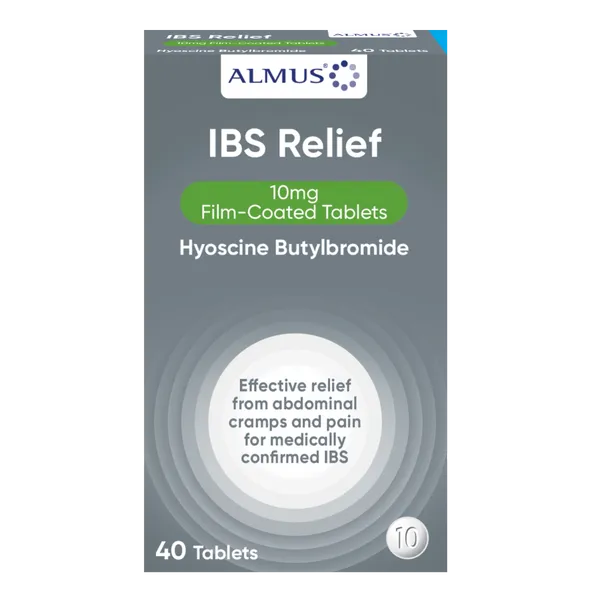
Do not take Almus IBS Relief 10mg Tablets if:
- You are allergic to hyoscine butylbromide or any of the other ingredients of this medicine (listed in section 6).
- You are intolerant to or cannot digest some sugars (as the tablet coating contains a small amount of lactose).
- You have glaucoma (an eye problem).
- You have something called 'myasthenia gravis' (a very rare muscle weakness problem).
- You have a suspected or confirmed blockage of the bowel.
- You have a condition where the bowel is blocked and does not work properly (paralytic or obstructive ileus). Symptoms include severe abdominal pain with lack of stools and/or nausea/vomiting.
- You have a very enlarged bowel (megacolon).
- You are pregnant, likely to get pregnant, or are breast-feeding.
Do not take Almus IBS Relief 10mg Tablets if any of the above applies to you. If you are not sure, talk to your doctor or pharmacist before taking this medicine.
Warnings and precautions
Talk to your doctor or pharmacist before taking Almus IBS Relief 10mg Tablets if any of the following apply to you, even if you know you have IBS, in case your abdominal pain may be something else:
- You are 40 years or over and it is some time since your last attack of IBS or the symptoms are different this time.
- You have recently passed blood from the bowel.
- You have severe constipation.
- You are feeling sick or vomiting.
- You have lost your appetite or lost weight.
- You have difficulty or pain passing water (urine).
- You have a fever.
- You have recently travelled abroad (in case you have picked up a stomach bug).
- You have a very fast heart rate or other heart problems.
- You have been treated by a doctor for a severe sweating problem.
If you are not sure if any of the above applies to you, talk to your doctor or pharmacist before taking Almus IBS Relief 10mg Tablets. Check with your doctor or pharmacist straight away if you have unexplained abdominal pain which persists or worsens or occurs with:
- Fever
- Feeling sick
- Being sick
- Changes in your bowel movements
- Abdominal tenderness
- Low blood pressure
- Feeling faint or,
- Blood in your bowel movements.
Other medicines and Hyoscine Butylbromide Tablets
Tell your doctor or pharmacist if you are taking, have recently taken or might take any other medicines, including medicines obtained without a prescription and herbal medicines. This is because Almus IBS Relief 10mg Tablets can affect the way some other medicines work, and some other medicines can affect the way Almus IBS Relief Tablets work.
In particular, tell your doctor or pharmacist if you are taking any of the following medicines:
- Antihistamines - used to treat hay fever and other allergies.
- Tetracyclic or tricyclic medicines - used to treat depression and some types of pain.
- Antipsychotic medicines such as butyrophenones or phenothiazines - used to treat severe mental illness such as schizophrenia.
- Dopamine antagonists such as metoclopramide for feeling sick.
- Beta 2 adrenergic medicines such as salbutamol inhalers for asthma.
- Quinidine or disopyramide - used to control your heart beat.
- Amantadine - used for Parkinson's disease and flu.
- Anticholinergic medicines such as tiotropium, ipratropium or atropine-like medicines - usually inhaled to treat breathing problems.
If you are not sure if any of the above apply to you, talk to your doctor or pharmacist before taking Almus IBS Relief 10mg Tablets.
Pregnancy, breast-feeding and fertility
Do not take this medicine if you are pregnant or breast-feeding, think you may be pregnant or are planning to have a baby.
Driving and using machines
Some people may have temporary blurring of vision while taking this medicine. If this happens to you, wait until your vision returns to normal before driving or using any tools or machines.
Almus IBS Relief 10mg Tablets contain lactose
If you have been told by your doctor that you have an intolerance to some sugars, contact your doctor before taking this medicinal product.
Possible Side Effects
Like all medicines, this medicine can cause side effects, although not everybody gets them. The following side effects may happen with this medicine:
Mild side effects that do not normally require medical treatment:
- Uncommon - may affect up to 1 in 100 people
- Dry mouth.
- Abnormal sweating or reduced sweating.
If any of these side effects get troublesome or seem serious to you please tell your pharmacist or doctor.
If you get any of the side effects described below stop taking this medicine and tell your doctor straight away. You may need urgent medical treatment:
- Uncommon - may affect up to 1 in 100 people
- Skin reactions such as urticaria and pruritus (itching).
- Tachycardia (increased heart rate).
- Rare - may affect up to 1 in 1,000 people
- Problems emptying the bladder.
- Isolated events - some side effects are so rare that it is not known how many people may be affected.
- Anaphylactic reaction and shock - this is a severe type of allergic reaction. An itchy rash may spread all over the body, as well as swelling. You may have difficulty in breathing and may lose consciousness.
- Dyspnoea (difficult or laboured breathing).
- Allergic reactions (hypersensitivity) such as skin rash and erythema (patchy red skin).
If you experience a painful red eye with loss of vision after taking this medicine, stop taking it and tell your doctor straight away. You may have an eye problem called glaucoma and need urgent medical attention.
Reporting of side effects
If you get any side effects, talk to your doctor or pharmacist. This includes any possible side effects not listed in this leaflet. You can also report side effects directly via the Yellow Card Scheme at: www.mhra.gov.uk/yellowcard or search for MHRA Yellow Card in the Google Play or Apple App Store. By reporting side effects you can help provide more information on the safety of this medicine.