How to Care For Athlete’s Foot: Symptoms & Treatment
In this guide
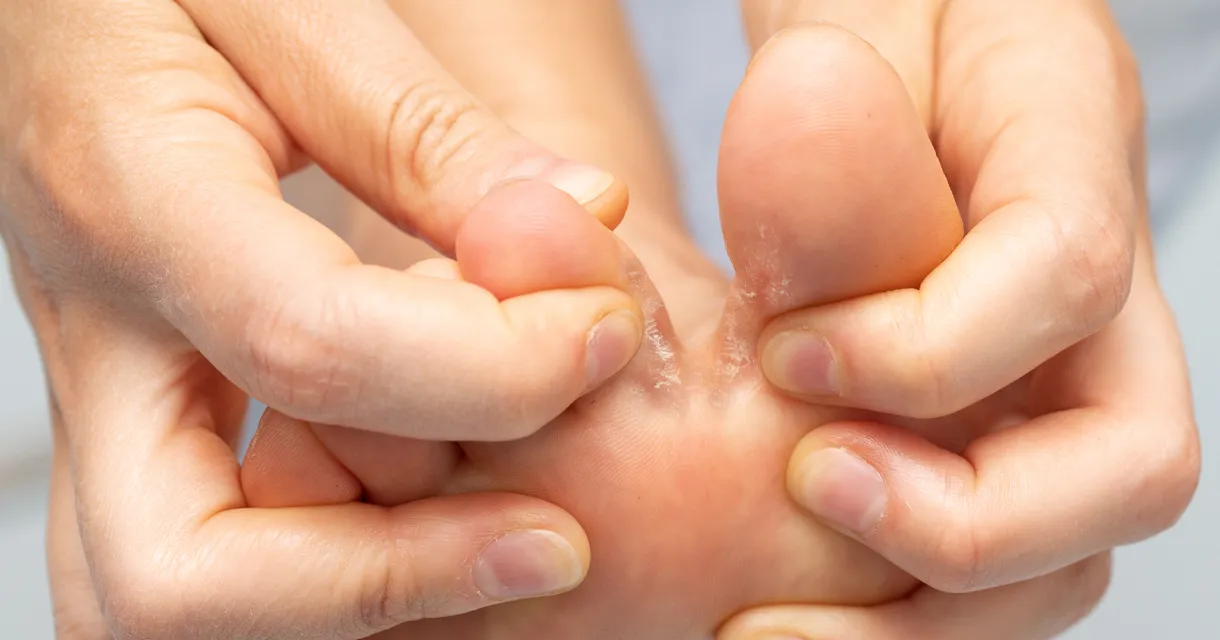
Athlete’s foot can be uncomfortable, itchy and persistent, but in most cases it can be treated effectively with antifungal medicine and good foot care.
The key is recognising the infection early, keeping your feet clean and dry, and completing treatment even if your symptoms start improving.
Here’s how to identify athlete’s foot, treat it correctly and reduce the chances of spreading or developing it again.
Quick Overview
- Athlete’s foot (tinea pedis) is a contagious fungal infection that commonly affects the skin between the toes but can also spread to the soles, sides of the feet and toenails.
- Common symptoms include itching, flaky or cracked skin, soreness, burning and fluid-filled blisters.
- The infection can spread through direct contact or contaminated surfaces and personal items, while sweaty feet, damp socks and minor skin damage can increase your risk.
- Treatment usually involves topical antifungal medicines alongside good foot hygiene, including keeping your feet clean and thoroughly dry.
What Is Athlete’s Foot?
Athlete’s foot, medically known as tinea pedis, is a fungal infection affecting the skin of the feet. It most commonly develops between the toes, although it can also affect the soles and sides of the feet.
Despite its name, you do not have to be an athlete to develop it. The fungi responsible thrive particularly well in warm, moist environments, making sweaty feet and communal changing or shower areas common risk factors.
What Are the Symptoms of Athlete’s Foot?
Athlete’s foot can look different depending on where and how severely the skin is affected. Common symptoms include:
- Itchy white patches, particularly between the toes
- Flaky, scaly or peeling skin
- Dry or cracked skin
- Redness or other changes in skin colour
- Soreness or burning
- Cracks that may occasionally bleed
- Small, fluid-filled blisters
The infection can spread to other areas of the foot (soles or sides of the feet) and, if left untreated, may also spread to the toenails, which can lead to a fungal nail infection.
How Do You Get Athlete’s Foot?
Athlete’s foot spreads when your skin comes into contact with the fungi responsible for the infection. This can happen through direct skin-to-skin contact or indirectly through contaminated surfaces and personal items.
For example, you may pick up the infection by:
- Walking barefoot in communal showers, changing rooms, pools, or saunas.
- Sharing towels, socks or shoes.
- Coming into contact with affected skin.
- Touching contaminated floors or other surfaces.
Fungi thrive in warm and damp conditions, so keeping feet moist or sweaty for prolonged periods can create an environment in which infection is more likely to develop.
What Increases Your Risk of Athlete’s Foot?
Certain conditions make it easier for the fungi that cause athlete’s foot to grow and infect the skin. Common risk factors include:
- Sweaty feet: Wearing tight, closed or poorly ventilated shoes for long periods can trap heat and moisture, creating an ideal environment for fungi to grow.
- Damp socks: Staying in wet or sweaty socks keeps your feet moist for longer and can encourage fungal growth.
- Minor skin damage: Small cuts, cracks or other breaks in the skin can make it easier for fungi to establish an infection.
If exercise is a regular part of your routine, you may also find our guide to common sports injuries and their treatments useful.
Is Athlete’s Foot Contagious?
Yes, athlete’s foot is contagious and can spread from one person to another through direct contact or contaminated surfaces and items such as floors, towels, socks and shoes.
It can also spread to other areas of your own body, particularly if you scratch the infected skin and then touch elsewhere. Washing your hands after applying treatment and avoiding scratching can help reduce this risk.
How to Treat Athlete’s Foot
Athlete’s foot is unlikely to clear up by itself, so treatment is usually needed. Several antifungal medicines can be used to treat athlete’s foot, so let’s take a closer look at some of the most common options:
1. Use An Antifungal Treatment
Antifungal medicines either kill fungi or prevent them from growing. For athlete’s foot, topical treatments are available as creams, gels, sprays, liquids and powders.
Common antifungal active ingredients include:
- Terbinafine (e.g., Lamisil)
- Clotrimazole (e.g., Canesten)
- Ketoconazole (e.g., Daktarin Gold)
The correct application frequency and treatment duration depend on the medicine, so always follow the instructions supplied with your product. Importantly, do not stop treatment early simply because your symptoms look better, as the infection can return.
2. Keep Your Feet Clean And Dry
Wash your feet regularly and dry them thoroughly afterwards, paying particular attention to the spaces between your toes. Rather than rubbing irritated skin, gently dab it dry.
Wear clean socks every day and choose footwear that does not leave your feet excessively hot and sweaty. Alternating shoes can also give each pair time to dry properly between wears.
3. Treat Blisters Carefully
Athlete’s foot can sometimes cause small fluid-filled blisters. Avoid deliberately bursting, scratching or picking them, as damaged skin can increase the risk of further infection.
If blistering is extensive, particularly painful, or you are unsure whether athlete’s foot is actually responsible, speak to a pharmacist or GP rather than attempting to treat the blisters yourself.
4. Moisturise Dry or Cracked Skin Carefully
Athlete’s foot can sometimes leave the skin on your feet dry, flaky or cracked. Using a suitable moisturiser on these areas can help soften the skin and prevent dryness from worsening, alongside your antifungal treatment.
How to moisturise feet with athlete’s foot
When moisturising your feet:
- Apply the product mainly to dry or cracked areas, such as the soles and heels.
- Keep moisturiser away from the spaces between your toes, particularly where the skin is already moist or soggy, as additional moisture can create conditions that favour fungal growth.
- If you are also using a topical antifungal, follow its instructions carefully and allow it to absorb before applying other products.
- Wash your hands after touching or treating the affected skin to help prevent the infection from spreading.
If you are unsure which moisturiser is suitable alongside your antifungal treatment, ask a pharmacist for advice.
Quick Athlete’s Foot Care Guide: Do’s & Don’ts
|
Do |
Don’t |
|
Dry your feet thoroughly, especially between your toes |
Scratch or pick affected skin |
|
Wear fresh socks every day (cotton socks are the best) |
Share towels, socks, or shoes |
|
Use a separate towel for your feet and wash it regularly |
Walk barefoot in communal showers or changing rooms |
|
Follow your antifungal treatment instructions carefully |
Stop treatment early just because symptoms improve |
|
Allow shoes to dry between uses |
Wear footwear that keeps your feet hot and sweaty |
|
Wash your hands after touching or treating affected skin |
Apply ordinary moisturiser between affected toes |
When to See a GP
Speak to a GP if:
- Pharmacy treatments have not worked
- You are experiencing significant pain
- Your foot or leg becomes hot, painful and red
- The infection spreads to other areas, such as your hands
- You have diabetes
- You have a weakened immune system.
A GP may take a small skin scraping to confirm the diagnosis, prescribe additional treatment or, when necessary, prescribe antifungal tablets.
Athlete’s Foot — Conclusion
Athlete’s foot is usually manageable with the right antifungal treatment and consistent foot hygiene. Keeping your feet clean and dry, completing treatment and avoiding behaviours that spread the infection can also help prevent it from returning.
For effective treatment at home, explore Weldricks’ range of trusted antifungal products to find a suitable option for managing fungal infections and relieving uncomfortable symptoms!
FAQs
What should I wash athlete’s foot with?
Wash your feet with water and your usual mild soap or cleanser, then dry them carefully and thoroughly, particularly between the toes.
Can the fungi responsible for athlete’s foot live on bedsheets?
Yes, the fungi can contaminate fabrics and personal items, which is why good hygiene is important while treating the infection. Do not share towels or bedding, and wash towels and bed linen regularly to help reduce the risk of spreading fungal skin infections.
What can be mistaken for athlete’s foot?
Several conditions can cause itchy, scaly, cracked, or irritated feet, including:
- Eczema
- Contact dermatitis
- Psoriasis
Because they require different treatments, speak to a pharmacist or GP if you are unsure whether your symptoms are caused by a fungal infection.
How long does athlete’s foot take to clear?
It depends on the antifungal medicine and severity of the infection. Many treatments take several weeks, although improvement may begin sooner. Always complete treatment for the period specified in the product instructions.
Published 2nd September 2026 by

Allan Green
Registered Pharmacist & Head of E-commerce
Allan has been a Registered Pharmacist for 25+ years
He specializes in Ecommerce and Over the Counter medicines.
He is a Registered Pharmacist, who studied at University of Bradford.
He has been with Weldricks since 2006, starting as a branch manager before moving into area management and deputy superintendent roles.
His current responsibilities include web development, marketing, content, customer service and web operations teams.