Can I Get the Contraceptive Pill From A Pharmacy?
In this guide
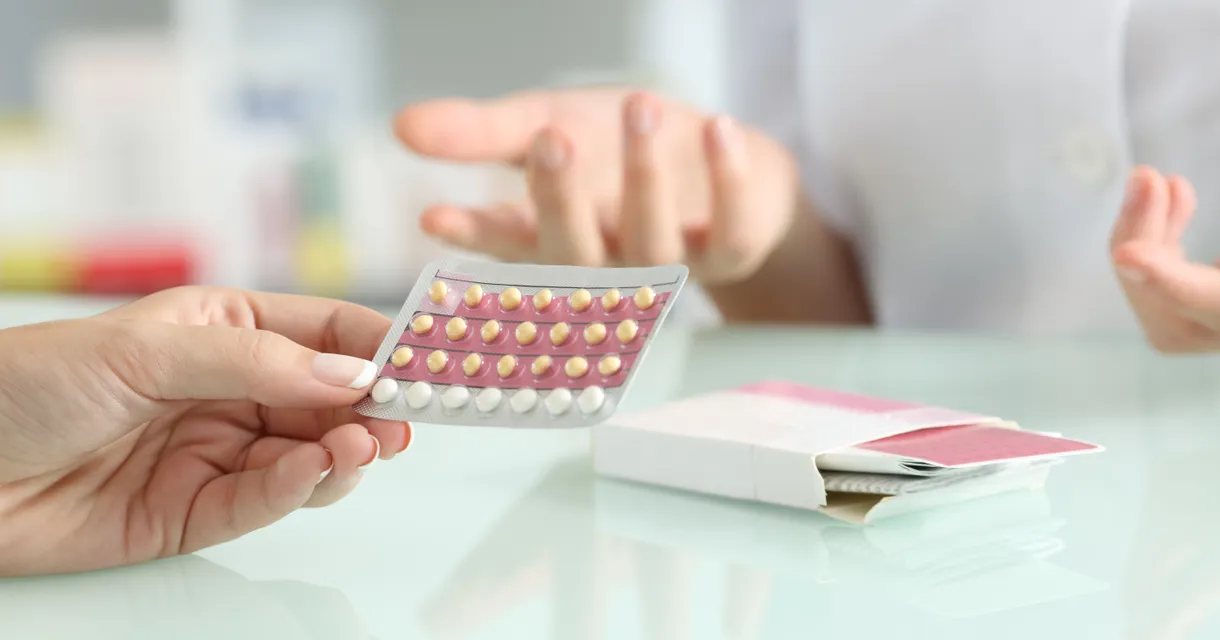
Can I get contraception from a pharmacy? Is the contraceptive pill free? Who can get it?
These are just some of the questions many women ask when they’re thinking about contraception.
If you’re also considering your options, this guide answers common questions about getting the pill from a pharmacy, what to expect, whether it’s free, and more.
Can I Get the Contraceptive Pill From a Pharmacy? [Quick Answer]
Yes. In the UK, many pharmacies can provide the contraceptive pill through an NHS-funded service.
This includes the combined contraceptive pill or the progestogen-only pill (mini pill) when supplied through NHS services.
Read our expert guide to find out more about the combined contraceptive pill and its differences from the mini pill!
How to Get the Contraceptive Pill From a Pharmacy [How the Service Works]
Getting the pill from a pharmacy is part of the NHS pharmacy contraception service and is designed to be safe, straightforward, and confidential.
Let’s see the process step by step:
- Find and visit a participating pharmacy offering the NHS service.
- Have a private consultation with a trained pharmacist.
- Answer health and lifestyle questions to check suitability.
- Basic checks may be done (for example, blood pressure or BMI, if needed).
- Receive the contraceptive pill or short-term supply, or be advised on the most suitable next steps.
The pharmacist may offer you the combined pill or the progestogen-only pill.
They will also explain everything you need to know about the pill (e.g., how to take it, when it starts working, etc.).
You can access this via the pharmacy contraception service at Weldricks, with professional advice and discreet support.
Is the Contraceptive Pill Free In the UK?
Yes, the contraceptive pill is free in the UK through the NHS. You can take it with or without a prescription.
Apart from pharmacies, you can also get it for free in:
- Sexual health/contraception clinics
- GP surgeries
- Young people’s services
Who Can Get the Contraceptive Pill?
- Individuals who are already taking oral contraception.
- Individuals who want to start contraception for the first time.
- Individuals from menarche up to 49 (for combined contraceptive pill) or 54 (for the mini pill).
You can take contraceptive pills without a prescription. If you already have a prescription for the pill, you can use it as usual.
What to Expect When Getting Contraception Without a Prescription?
A pharmacy consultation is supportive and private, so you don’t have to worry about someone else finding out about your intentions.
You will have a confidential chat with a trained pharmacist about your health and preferences. They will decide what’s the safest option for you, explain how to take the pill, and what to do if you miss one.
Questions You Can Ask the Pharmacist
Even though the pharmacist will explain everything clearly during your consultation, it can still help to go in with a few questions in mind.
This can make the conversation easier and help you feel more confident about your choice.
Some of the questions you can ask include:
- Which pill might suit me best?
- What side effects should I be aware of?
- What happens if I miss a pill?
- When does the pill start working?
- Can I switch pills later if this one doesn’t suit me?
- What medications or supplements can make the pill less effective?
- Will the pill affect my periods?
- Do I need a review or a follow-up?
- When should I see a doctor?
- Are there other contraception options I should consider (either now or in the future)?
What Other Types of Contraception Are There?
There are several contraceptive methods beyond birth control pills:
- Barrier methods: They physically block sperm from reaching the egg and are used during sex.
- Hormonal methods: They change hormone levels inside the body, usually stopping ovulation. They include options taken daily, weekly, monthly, or long-term.
- Emergency contraception: This method is used after unprotected sex or if contraception fails (e.g., the condom breaks). It works by delaying ovulation. By the way, check Weldricks’ guide to the emergency contraceptive pill to learn more!
Examples of Barrier Methods
- Male (external) condoms
- Female (internal) condoms
- Diaphragm
Examples of Hormonal Methods
- Pills (combined or mini pill)
- Patch
- Injection
- Vaginal ring
- Implant
Examples of Emergency Contraception
- Morning-after pill (or Plan B pill)
- Copper coil (intrauterine device/IUD)
Can I Order the Contraceptive Pill Online Instead?
Yes. Weldricks allows you to order the contraceptive pill online.
All you need to do is:
- Complete Tuune’s quick assessment.
- Chat with a Weldricks pharmacist.
- Receive your personalised report.
- Review your options, choose your preferred contraceptive option, and have it delivered home!
Can I Get Contraception from a Pharmacy — Conclusion
Access to contraception is now made easier and more flexible, without compromising safety or confidentiality.
You can now get the contraceptive pill without seeing your GP first, whether you’re already taking it or want to start it.
If you have any questions or need support at any stage, you can contact Weldricks for advice!
FAQs
How long can I stay on birth control pills?
Many women can stay on birth control pills for many years without problems. There isn’t a set time limit. However, consult your doctor if you notice any changes in your cycle.
Can birth control pills affect my weight?
Scientific evidence shows no link between taking birth control pills and weight gain.
Are birth control pills or condoms safer?
According to the NHS:
- Birth control pills (the combined and the mini pill) are over 99% effective with perfect use and 91% effective with typical use.
- Condoms are 98% effective with perfect use and 82% with typical use.
Published 9th February 2026 by

Richard Hackett
Director of Pharmacy Service
My first role in Weldricks was as a Saturday assistant before starting at Bradford University, where I obtained a Master of Pharmacy Degree and qualified as a Pharmacist in 2005.
I started my career as a Pharmacist as the manager of our Swinton branch, before moving between several branches and completing a Clinical post-graduate diploma from Keele University in 2010. After re-joining the company in 2019, I’ve held a number of field and central roles before moving into my current position in 2025. I am responsible for the safe and effective running of our Pharmacy Network, working with all different functions to make this happen.