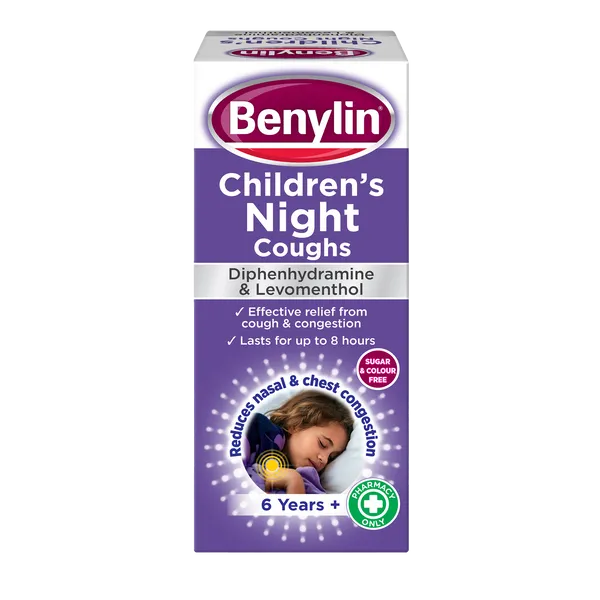
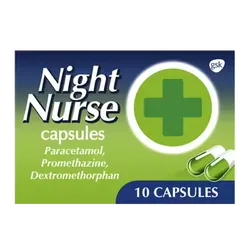
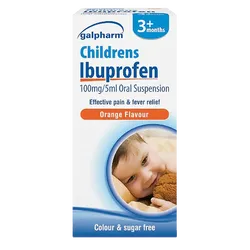
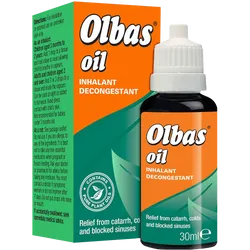
Do not give your child Benylin Children's Night Coughs 6+ Years 125ml if:
- S/he has ever had a bad reaction to this product or any of the ingredients.
- S/he is taking, or has taken in the last two weeks, drugs for depression known as Monoamine Oxidase Inhibitors (MAOIs).
- S/he is aged under 6 years old.
- To make your child sleepy.
- S/he suffers from prostate problems (difficulty with passing water or needing to pass water often).
- S/he suffers from or has had closed angle glaucoma (increased pressure in the eye).
- S/he is taking any other cough and cold medicine.
If any of these apply, get advice from a doctor or pharmacist without using Benylin Children's Night Coughs.
Talk to your doctor or pharmacist if:
- Your child suffers from liver or kidney problems.
- Your child has difficulty passing water (urinary retention).
- Your child has a persistent cough such as occurs with asthma, bronchitis or emphysema, is suffering from an asthma attack or a cough that produces a lot of mucus (phlegm).
- Your child may have glaucoma (increased pressure in the eye).
- Your child is taking any other medicines containing diphenhydramine, including any creams, ointments or gels.
- You have been told by your doctor that your child has an intolerance to some sugars.
- Your child is taking any other medicines, including:
- Antimuscarinic / anticholinergic drugs e.g.: tricyclic antidepressants (drugs to treat mood disorders), atropine (used to treat some eye conditions and occasionally bowel conditions).
- CNS depressants e.g.: sleeping tablets including barbiturates, minor tranquillisers (drugs used to relax muscles or decrease anxiety), opioid analgesics (drugs used to relieve pain e.g. codeine, tramadol, morphine), antipsychotics (drugs used to treat delusions, hallucinations or confused thoughts).
- Alcohol.
If you are not sure about any of the medicines your child is taking, show the bottle or pack to your pharmacist. If any of these bullet points apply now or in the past, talk to a doctor or pharmacist.
Important Warnings:
- This product can make some people feel drowsy, dizzy or have blurred vision. Make sure that your child is not affected if he or she is going to do anything where they need to be alert. Be especially careful if the child is taking another medicine which may also cause drowsiness.
- This medicine contains 2.53 g sorbitol in each 5 ml. Sorbitol is a source of fructose. If your doctor has told you that you (or your child) have an intolerance to some sugars or if you have been diagnosed with hereditary fructose intolerance (HFI), a rare genetic disorder in which a person cannot break down fructose, talk to your doctor before you (or your child) take or receive this medicine. Sorbitol may cause gastrointestinal discomfort and mild laxative effect.
- This medicine contains 197 mg of alcohol (ethanol) in each 5 ml. This can be harmful for those suffering from alcoholism. To be taken into account in pregnant or breast-feeding women, children and high-risk groups such as patients with liver disease or epilepsy.
- This medicinal product contains 16.47 mg sodium per 5 ml. To be taken into consideration by patients on a controlled sodium diet.
- This medicine contains 25 mg sodium benzoate (E211) in each 5 ml.
If your child experiences any of the following, stop using the medicine and seek medical help immediately:
- Allergic reactions including skin rashes (which may be severe and include blistering and peeling of the skin) and itching.
If your child experiences any of the following, stop using the medicine and talk to your doctor:
- Difficulty passing urine.
- Fits or seizures.
Other effects that may occur include:
- Very common (may affect more than 1 in 10 people): Drowsiness.
- Common (may affect up to 1 in 10 people): Dizziness or unusual weakness, stimulation or slowness in movement or speech, headache, thickened mucus or blurred vision, dry mouth, nausea or vomiting.
- Uncommon (may affect up to 1 in 100 people): Irritability, hallucinations, nervousness, agitation or sedation, pins & needles (paraesthesia), ringing in the ears (tinnitus), a fast heartbeat, low blood pressure or chest discomfort, dry nose.
- Rare (may affect up to 1 in 1,000 people): Blood disorders, confusion, depression, involuntary movements, shakiness (tremor) or difficulty sleeping, irregular heartbeat or increased awareness of the heartbeat (palpitations), liver problems.
If your child experiences any side-effects not included in this leaflet, or you are not sure about anything, talk to your doctor or pharmacist.
Store below 30°C. Discard the bottle 4 months after opening. Keep the product out of the sight and reach of children. Do not use your medicine after the date shown as an expiry date on the packaging. Medicines should not be disposed of via wastewater or household waste. Ask your pharmacist how to dispose of medicines no longer required. These measures will help to protect the environment.