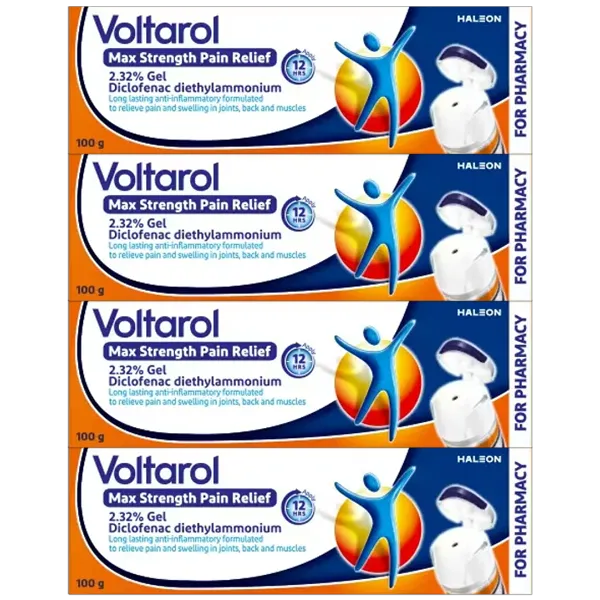
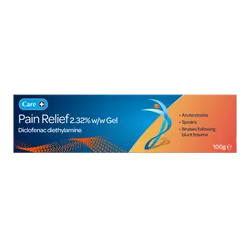
Do not use Voltarol Max Strength Pain Relief 2.32% Gel if you:
- Are allergic (hypersensitive) to diclofenac or other medicines used to treat pain, fever or inflammation, such as ibuprofen or aspirin (a substance also used to prevent blood clotting), or any of the other ingredients of this medicine. Symptoms of an allergic reaction may include: wheezing or shortness of breath (asthma); skin rash with blisters or hives; swelling of the face or tongue; runny nose.
- Have severe joint pain of recent onset that is not related to an injury or period of overuse.
- Feel ill, have a temperature or any other symptoms that accompany the pain.
- Are in the last 3 months of pregnancy.
If any of these apply to you, do not use this medicine.
Take special care with Voltarol Max Strength Pain Relief 2.32% Gel
- Do not apply the gel to skin that has (i) a rash or eczema (ii) cuts or open wounds. Stop the treatment if a skin rash develops after applying the product.
- Avoid applying on large areas of skin and over a prolonged period of time, unless under medical advice.
- Be careful when sunbathing or using sun lamps as your skin may be more sensitive to sunlight.
- This medicine is only for use on your skin. Do not use it in the mouth. Do not swallow it.
- Wash your hands after use unless they are the area to be treated. Be careful not to get Voltarol Max Strength Pain Relief 2.32% Gel in your eyes. If this happens, rinse your eyes well with clean water. See your doctor or pharmacist if any discomfort persists.
- Due to an increased possibility of side effects, take care if you are using any other medicine containing diclofenac or painkillers known as NSAIDs, such as aspirin or ibuprofen.
- A brace or wrap commonly used for injuries like sprains can be used, but do not use the gel under airtight (plastic) bandages.
- If you have a stomach or duodenal ulcer (or a history of), tell your doctor or pharmacist before using the gel.
- If you have or have ever had asthma speak to your doctor or pharmacist before using the gel.
- Do not smoke or go near naked flames - risk of severe burns. Fabric (clothing, bedding, dressings, etc.) that has been in contact with this product burns more easily and is a serious fire hazard. Washing clothing and bedding may reduce product build-up but not totally remove it.
If you have any questions, talk to your doctor or pharmacist before using this medicine.
This medicine is not recommended for use in children under 14 years of age.
Taking other medicines with Voltarol Max Strength Pain Relief 2.32% Gel
Please tell your doctor or pharmacist if you are taking, or have recently taken, or want to start taking any other medicines, including those obtained without a medical prescription.
Pregnancy and breast-feeding
If you are pregnant or breast-feeding, think you may be pregnant or are planning to have a baby, ask your doctor or pharmacist for advice before using this medicine.
Voltarol Max Strength Pain Relief 2.32% Gel must not be used during the last 3 months of pregnancy, as it could harm your unborn child or cause problems at delivery.
This medicine should only be used under medical advice during the first 6 months of pregnancy and the dose should be kept as low and duration of treatment as short as possible.
Voltarol Max Strength Pain Relief 2.32% Gel should only be used under medical advice during breast-feeding as diclofenac passes into breast milk in small amounts. However, this medicine should not be applied on the breasts of nursing mothers nor elsewhere on large areas of skin or for a prolonged period of time. Consult your doctor or pharmacist for further information if you are pregnant or breast-feeding.
Oral forms (e.g. tablets) of diclofenac can cause adverse effects in your unborn baby. It is not known if the same risk applies to diclofenac when it is used on the skin.
Possible side effects
Like all medicines, Voltarol Max Strength Pain Relief 2.32% Gel can cause side effects, although not everybody gets them.
Some rare and very rare side effects might be serious
If you experience any of the following signs of allergy, STOP using this medicine and tell a doctor or pharmacist immediately:
- Skin rash with blisters; hives. (These side effects are likely to affect 1 to 10 people in every 10,000).
- Wheezing, shortness of breath or feeling of tightness in the chest (asthma). (These side effects are likely to affect less than 1 person in every 10,000).
- Swelling of the face, lips, tongue or throat. (These side effects are likely to affect less than 1 person in every 10,000).
Other side effects which may occur are usually mild, passing and harmless (if you are concerned, tell a doctor or pharmacist).
Common side effects
(likely to affect between 1 and 10 in every 100 patients)
- Skin rash, itching, reddening or smarting of the skin.
Very rare side effects
(likely to affect less than 1 in every 10,000 patients)
- The skin may be more sensitive to the sun. Possible signs are sunburn with itching, swelling and blistering.
Some side effects have unknown frequency
(cannot be estimated from available information):
- Local application site irritation, peeling of the skin and skin discolouration.
Reporting of side effects
If you get any side effects, talk to your doctor, pharmacist or nurse. This includes any possible side effects not listed in this leaflet. You can also report side effects directly via the Yellow Card Scheme at www.mhra.gov.uk/yellowcard or search for 'MHRA Yellow Card' in the Google Play or Apple App Store.
By reporting side effects you can help provide more information on the safety of this medicine.