Bullous vs Non-Bullous Impetigo: Key Differences Explained
In this guide
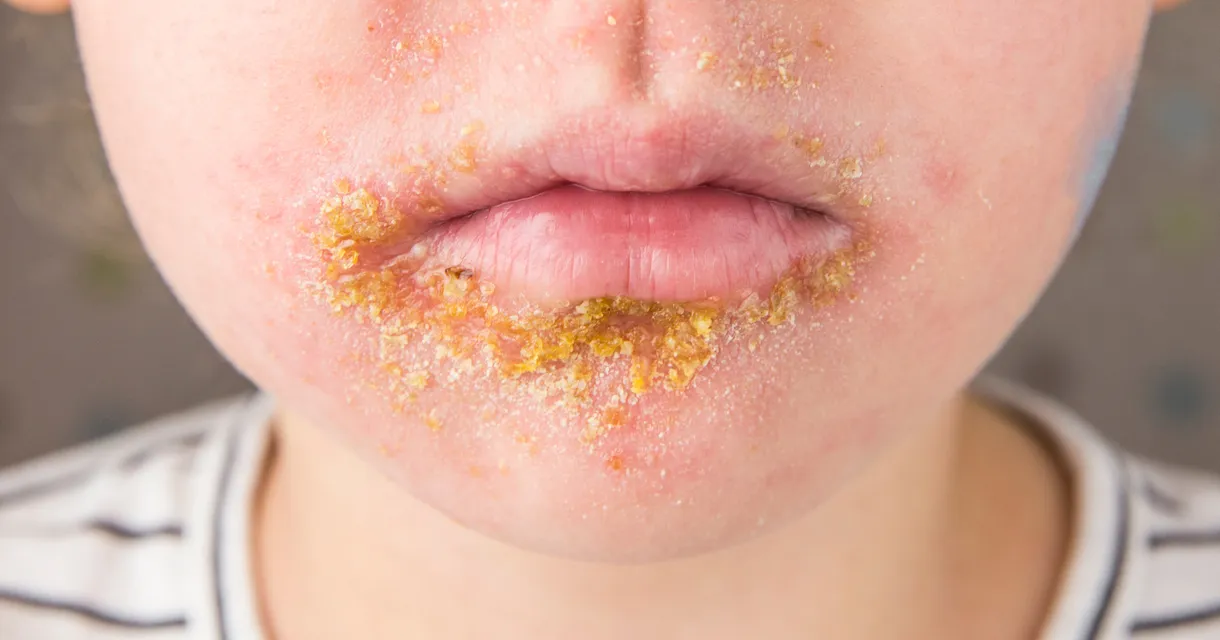
Impetigo is a highly contagious bacterial skin infection, most common in young children but also possible in adults.
Usually caused by Staphylococcus aureus or Streptococcus pyogenes, it produces sores, blisters or characteristic golden-brown crusts and spreads easily through close contact.
There are two main types: bullous and non-bullous impetigo. So, what separates them and does treatment differ?
Non-Bullous vs Bullous Impetigo [Quick Comparison]
| Feature | Non-bullous impetigo | Bullous impetigo |
|---|---|---|
| How common is it? | Most common form (70% of cases) | Less common (30% of cases) |
| Main bacteria | Staphylococcus aureus, Streptococcus pyogenes, or both | Toxin-producing S. aureus |
| Typical appearance | Small sores/blisters that burst and form golden-brown crusts | Larger, fragile, fluid-filled blisters |
| Early-stage impetigo | Often starts as a red spot, small blister or pustule | Starts with thin-roofed, fluid-filled blisters |
| After lesions burst | Honey/golden-brown crust develops | Yellow fluid may leak, leaving a thin, scaly rim |
| Common locations | Face, particularly around the nose and mouth; arms and legs | Face, trunk, limbs, buttocks and skin folds |
| Itching | Can occur | Can occur |
| Fever/feeling unwell | Usually absent | More likely |
| Spread | Can spread quickly to other areas | Can also spread to other areas |
| Typical treatment | Hydrogen peroxide 1% cream or antibiotics, depending on severity | Oral antibiotic |
What Is Bullous Impetigo?
Bullous impetigo is the less common (about 30% of the cases) blister-forming type of impetigo.
It is caused by particular strains of Staphylococcus aureus that release toxins affecting the proteins that hold cells together in the outer layer of the skin.
This causes the skin layers to separate and produces the characteristic larger, fragile blisters, known as bullae.
What Causes Bullous Impetigo?
Unlike non-bullous impetigo, which can involve either S. aureus or S. pyogenes, bullous impetigo is caused by toxin-producing S. aureus.
These exfoliative toxins damage connections between cells near the skin's surface, allowing fluid to collect and form blisters. Bullous impetigo can also develop on previously intact skin.
Symptoms of Bullous Impetigo
Look out for:
- Larger, fluid-filled blisters
- Blisters that quickly enlarge and easily burst
- Yellow fluid leaking from broken blisters
- A thin, scaly rim around ruptured blisters
- Itching
- Fever or feeling generally unwell in some cases
- Swollen lymph nodes in some people
Where Does Bullous Impetigo Usually Appear?
Bullous impetigo can develop anywhere on the body, but it commonly affects warm, moist areas and skin folds. Typical locations include:
- The trunk, particularly the abdomen
- The armpits
- The groin and nappy area
- The arms and legs
- The face
What Is Non-Bullous Impetigo?
Non-bullous impetigo is the most common form of the infection (70% of the cases). It usually begins with small red sores, pustules or blisters. These quickly burst, leaving moist areas that develop the recognisable golden-brown or honey-coloured crust.
What Causes Non-Bullous Impetigo?
Non-bullous impetigo can be caused by Staphylococcus aureus, Streptococcus pyogenes, or both.
Unlike bullous impetigo, toxin production is not responsible for its characteristic appearance. Bacteria often enter through damaged skin, including cuts, scratches and insect bites. Existing skin conditions can also weaken the skin barrier. For example, scratching eczema may make bacterial infection easier.
Read also: Winter Eczema: Calm Flare-Ups with These Tips.
Symptoms of Non-Bullous Impetigo
Common signs include:
- Small red sores, pustules or blisters
- Sores that quickly burst
- Golden-brown or honey-coloured crusts
- Mild itching
- Swollen nearby lymph nodes in some cases
Where Does Non-Bullous Impetigo Usually Appear?
Non-bullous impetigo most commonly develops on exposed areas of skin, particularly the face around the nose and mouth. This is one of the most recognisable patterns of the infection.
Other common areas include:
- The hands and arms
- The legs
- Areas around cuts, scratches or insect bites
Because impetigo is contagious, scratching or touching infected sores can transfer the bacteria and cause new patches elsewhere on the body.
Non-Bullous vs Bullous Impetigo Treatment
Treatment for Non-Bullous Impetigo
- Localised non-bullous impetigo: If you are otherwise well and the infection affects a small area, hydrogen peroxide 1% cream may be recommended. Hydrogen peroxide acts as an antiseptic, helping to kill bacteria on the skin and control the infection. If this is unsuitable or has not worked, a healthcare professional may prescribe a short course of a topical antibiotic.
- Widespread non-bullous impetigo: A short course of either a topical or oral antibiotic may be prescribed. The choice depends on factors such as how extensive the infection is and whether applying a topical treatment to all affected areas would be practical.
Treatment for Bullous Impetigo
Bullous impetigo generally requires a short course of an oral antibiotic, rather than treatment with hydrogen peroxide or a topical antibiotic alone. Oral antibiotics are also recommended for people with any form of impetigo who are systemically unwell or at higher risk of complications.
Do not rely on appearance alone to decide which type of impetigo you have. A pharmacist or other healthcare professional can assess the impetigo rash and recommend the most appropriate treatment.
For more information about symptoms, causes, prevention and how the infection spreads, read our complete guide to impetigo!
Bullous vs Non-Bullous Impetigo — Conclusion
Bullous and non-bullous impetigo are contagious bacterial infections, but they differ in their appearance, bacterial causes and treatment.
Getting the correct diagnosis matters, particularly when blisters are widespread or you feel unwell.
For professional assessment and appropriate care, access Weldricks’ impetigo treatment service!
FAQs
What gets mistaken for impetigo?
Several skin conditions can resemble impetigo, including:
- Eczema
- Cold sores
- Contact dermatitis
- Fungal skin infections
- Psoriasis
Is bullous impetigo more serious than non-bullous impetigo?
Bullous impetigo can be associated with systemic symptoms such as fever and feeling unwell and requires oral antibiotic treatment. NICE also advises considering specialist advice for bullous impetigo, particularly in babies.
Can adults get impetigo?
Yes. Although impetigo in children is more common, adults can develop it too. Skin damage, close contact with someone who has the infection, and certain skin conditions can increase the risk.
Can impetigo spread across the body?
Yes. Touching or scratching infected areas can transfer bacteria elsewhere, resulting in new sores. Seek healthcare advice if the infection is widespread, worsening quickly or is accompanied by symptoms such as fever.
What is ecthyma?
Ecthyma is a deeper form of impetigo in which the infection extends further into the skin. It causes crusted sores with ulcers underneath and is associated with S. pyogenes and S. aureus. It commonly affects areas such as the legs, ankles, feet, thighs and buttocks, and is more likely to leave scarring than superficial impetigo.
Published 14th October 2026 by

Richard Hackett
Director of Pharmacy Service
My first role in Weldricks was as a Saturday assistant before starting at Bradford University, where I obtained a Master of Pharmacy Degree and qualified as a Pharmacist in 2005.
I started my career as a Pharmacist as the manager of our Swinton branch, before moving between several branches and completing a Clinical post-graduate diploma from Keele University in 2010. After re-joining the company in 2019, I’ve held a number of field and central roles before moving into my current position in 2025. I am responsible for the safe and effective running of our Pharmacy Network, working with all different functions to make this happen.