Is Swimming Good for Weight Loss?
In this guide
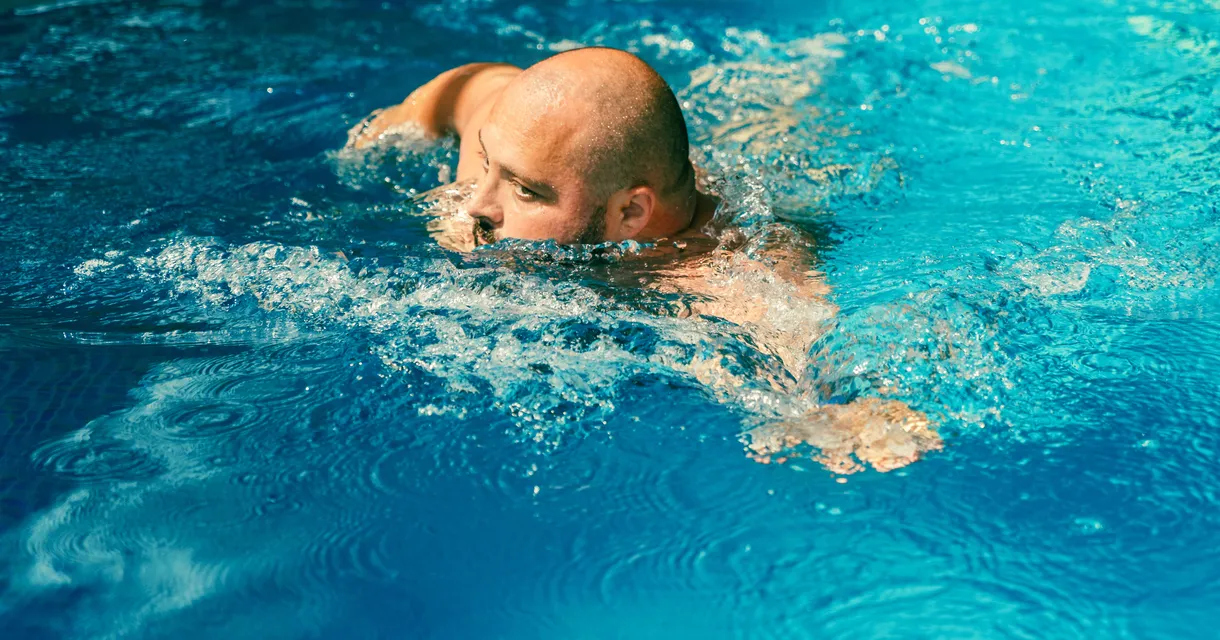
Swimming is often recommended as a gentle yet effective way to stay active. But can it actually help you lose weight?
The short answer is yes — when done consistently and combined with the right habits, swimming can support steady, sustainable weight loss.
To understand how effective it really is, it helps to explore how swimming works, what affects your results and how to make the most of it. Let’s take a closer look!
How Does Swimming Help You Lose Weight?
Swimming is one of the best exercises for weight loss. It helps you lose weight by creating a calorie deficit — meaning you burn more calories than you consume. Here’s how it works:
- Burns calories efficiently: Moving your body through water requires effort, increasing energy use.
- Uses full-body muscles: Arms, legs, core and back all work together, increasing total calorie burn.
- Adds natural resistance: Water resistance makes each movement harder than on land, helping build strength.
- Supports consistency: Low impact on joints makes it easier to stay active regularly.
- Improves fitness levels: Better endurance allows you to train longer and more effectively over time.
Pairing swimming with a balanced diet can further support your weight loss efforts. See what foods help with weight loss to make smarter food choices and support your progress more effectively!
How Many Calories Does Swimming Burn? (Factors that Play a Role)
The number of calories you burn while swimming can vary widely. It depends on several factors, including:
- Body weight
- Fitness level
- Swimming intensity (slow, moderate, vigorous)
- Stroke technique (e.g., freestyle, butterfly, etc.)
- Frequency and duration of sessions
Best Swimming Strokes for Weight Loss [Plus Calories Burned]
Different swimming strokes vary in intensity, technique and calorie burn. Choosing the right one (or combining several) can help you increase energy expenditure and support weight loss more effectively.
Let’s explore the different swimming strokes and how many calories they can burn:
1. Butterfly
Butterfly is one of the most demanding swimming strokes. Both arms move together in a sweeping motion, while the body creates a wave-like movement supported by a dolphin kick.
It:
- Works the whole body, especially the shoulders, chest and core.
- Requires strength, coordination and good technique.
- Best suited for more experienced swimmers (so, go for a different stroke if you’re just starting out).
Calories burned: ~400–500 per 30 minutes
2. Freestyle (Front Crawl)
Freestyle is the fastest and most commonly used stroke. It involves alternating arm movements with a flutter kick, while turning your head to breathe.
It:
- Works shoulders, arms, core, and glutes.
- Improves cardiovascular fitness and endurance.
- Is suitable for longer or faster-paced sessions.
Calories burned: ~300–400 per 30 minutes (moderate pace)
3. Breaststroke
Breaststroke is a slower, more controlled stroke. The arms move together in a circular motion, while the legs perform a frog-like kick.
Breaststroke:
- Works chest, arms, and inner thighs.
- Is easier to learn and maintain.
- Is suitable for beginners or steady swimming.
Calories burned: ~250–350 per 30 minutes
4. Backstroke
Backstroke is performed on your back using alternating arm movements and a flutter kick.
It:
- Works back, shoulders, and core.
- Helps improve posture.
- Allows steady breathing throughout.
Calories burned: ~200–300 per 30 minutes
For best results, you can combine different strokes in swimming sessions or include interval training (alternating faster and slower laps) to increase overall calorie burn and keep your swimming workouts more engaging.
What Other Health Benefits Does Swimming Offer?
Beyond calorie burn and weight loss, swimming supports overall health, as it:
- Improves heart health
- Improves respiratory health
- Supports joint health and mobility
- Increases flexibility
- Builds muscles without heavy strain
- Reduces stress (by the way, discover the best supplements for stress relief) and improves mood
- Improves sleep quality
How to Get Better Results from Swimming
To support weight loss more effectively:
- Swim regularly: Aim for 2–4 sessions per week.
- Increase intensity gradually: Add intervals or faster laps.
- Vary strokes: Mix up your strokes (butterfly, front crawl, backstroke, etc.) to work different muscle groups.
- Track your sessions: Monitor distance and time to keep track of your progress and stay motivated.
- Combine with strength training: This will burn even more calories and will help you preserve your muscles.
- Maintain a balanced diet: Avoid overeating after swimming, as it’s easy to consume more calories than you’ve burned; focus on a healthy, balanced diet to support your overall progress.
Is Swimming Better for Weight Loss Than Other Exercises? [Comparison]
|
Exercise |
Calories Burned (per hour) |
|
Swimming |
400-900 |
|
Walking |
180-350 |
|
Running |
500-600 |
|
Cycling |
500-600 |
|
HIIT |
500-1000 |
|
Pilates |
180-250 |
|
Yoga |
180-450 |
* The values above are estimates based on a fixed body weight of 70 kg (155 lbs). The number can also vary depending on the intensity of the exercise.
Swimming & Weight Loss — Summary
Swimming is a practical, full-body workout that can support weight loss while being gentle on the body. The key is consistency, combined with balanced nutrition and realistic goals.
If you’re finding it difficult to make progress with your weight, take a look at Weldricks’ weight management service and support your efforts with pharmacy-quality guidance!
FAQs
Can you lose belly fat by swimming?
You can’t target fat loss in one area, but swimming helps reduce overall body fat, including around the stomach.
Is swimming enough on its own for weight loss?
Swimming can be effective on its own, but combining it with a balanced diet and other activities (like strength training) often leads to better and more sustainable results.
Published 22nd June 2026 by

Allan Green
Registered Pharmacist & Head of E-commerce
Allan has been a Registered Pharmacist for 25+ years
He specializes in Ecommerce and Over the Counter medicines.
He is a Registered Pharmacist, who studied at University of Bradford.
He has been with Weldricks since 2006, starting as a branch manager before moving into area management and deputy superintendent roles.
His current responsibilities include web development, marketing, content, customer service and web operations teams.