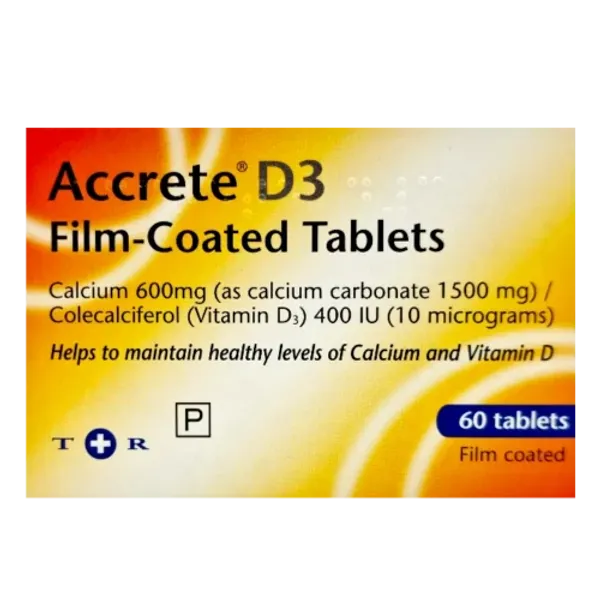
Important Warnings and Precautions for Accrete D3 Film-Coated Tablets Pack of 60
Do not take Accrete D3 film-coated tablets if you:
- Are allergic to the active substances or any of the other ingredients of this medicine (listed in section 6).
- Are allergic to peanut or soya, as Accrete D3 Film-Coated Tablets Pack of 60 contain hydrogenated soya oil.
- Have kidney stones, kidney failure or severe renal impairment, or calcium deposits in your kidneys (nephrocalcinosis).
- Have excessive amounts of vitamin D in the blood.
- Have chronically increased calcium level in your urine or elevated blood-calcium level.
- Have disturbed parathyroid hormone metabolism.
- Have sarcoidosis (an inflammatory disease of unidentified origin characterized by formation of cell agglomerates (lumps) in different locations).
- Are an immobilised patient with osteoporosis.
- Are taking thiazide diuretics (to treat high blood pressure).
- Are taking cardiac glycosides (to treat heart conditions) such as digoxin.
- Are less than 18 years of age.
Talk to your doctor or pharmacist before taking Accrete D3 film-coated tablets if you:
- Have kidney disease or impaired kidney function.
- Have sarcoidosis (an inflammatory disease of unidentified origin characterized by formation of cell agglomerates (lumps) in different locations).
- Are prone to development of kidney stones.
- Are an immobilised patient with osteoporosis.
Other medicines and Accrete D3 film-coated tablets
Please tell your doctor or pharmacist if you are taking or have recently taken any other medicines, including medicines obtained without a prescription.
Consult your doctor or pharmacist if you use:
- Other medicines or food supplements containing vitamin D or calcium, as concomitant use may lead to significant elevation of blood-calcium levels and cause harmful adverse effects. Do not use any other products containing vitamin D or calcium without medical advice during treatment with Accrete D3 Film-Coated Tablets Pack of 60.
- Thiazide diuretics.
- Systemic (per os [oral] or injection) corticosteroids (anti-inflammatory drugs).
- Cardiac glycosides (used for the treatment of cardiac [heart] failure).
Take special care if you use:
- Ion exchange resins such as cholestyramine or laxatives such as paraffin oil, as these medicines may reduce the gastrointestinal absorption of vitamin D.
- Tetracycline containing preparations (antibiotics), as calcium carbonate may interfere with their absorption. Tetracycline preparations should be administered at least two hours before or four to six hours after using Accrete D3 Film-Coated Tablets Pack of 60.
- Bisphosphonate (used for the treatment of osteoporosis) or sodium fluoride: these preparations should be administered at least three hours before using Accrete D3 Film-Coated Tablets Pack of 60.
- Rifampicin (a medicine for tuberculosis), phenytoin (a medicine for epilepsy) and barbiturates (medicines which are used for epilepsy or which help you sleep), as they may make the vitamin D3 less effective.
- Quinolone (antibiotics), as calcium may interfere with its absorption. Quinolone antibiotics should be taken two hours before or six hours after intake of calcium.
- Estramustin (a medicine used in chemotherapy), thyroid hormones or medicines containing iron, zinc or strontium, as the amount absorbed may be reduced. These should be taken at least 2 hours before or after Accrete D3 Film-Coated Tablets Pack of 60.
Accrete D3 film-coated tablets with food and drink
Oxalic acid (found in e.g. spinach, sorrel and rhubarb), phosphate and phytic acid (found in whole cereals) may inhibit calcium absorption. The patient should not take Accrete D3 Film-Coated Tablets Pack of 60 within two hours after eating foods rich in oxalic acid, phosphate and phytic acid.
Pregnancy, breast-feeding and fertility
If you are pregnant or breast-feeding, think you may be pregnant or are planning to have a baby, ask your doctor or pharmacist for advice before taking this medicine.
During pregnancy, the daily intake should not exceed 1500 mg calcium and 600 IU (International Unit) vitamin D. In pregnant women, overdoses of calcium and vitamin D should be avoided as permanent hypercalcaemia is related to adverse effects on the developing foetus. During pregnancy, Accrete D3 Film-Coated Tablets Pack of 60 should be used in the recommended doses only in cases of calcium and vitamin D3 deficiency. In other cases the daily dose of Accrete D3 Film-Coated Tablets Pack of 60 must not exceed one tablet per day. Accrete D3 Film-Coated Tablets Pack of 60 can be used during breast-feeding, but your doctor should be informed as calcium and vitamin D gets into the breast milk. This should be considered when giving additional vitamin D to the child.
There are no data available on the effect of Accrete D3 Film-Coated Tablets Pack of 60 on fertility.
Driving and using machines
There are no data on the effect of this product on the ability to drive or use machines.
Accrete D3 film-coated tablets contain soya oil and sucrose
Accrete D3 Film-Coated Tablets Pack of 60 contain hydrogenated soya oil. If you are allergic to peanut or soya, do not use this medicinal product. Accrete D3 Film-Coated Tablets Pack of 60 contain sucrose. If you have been told by your doctor that you have an intolerance to some sugars, contact your doctor before taking this medicinal product.
Possible Side Effects
Like all medicines, this medicine can cause side effects, although not everybody gets them. Adverse reactions are listed below by classes of organ systems and frequency of occurrence.
Uncommon (affects 1 to 10 users in 1,000):
- Significantly increased blood calcium level (hypercalcaemia) – symptoms include nausea, vomiting, lack of appetite, constipation, stomach ache, bone pain, extreme thirst, needing to pass urine more often, muscle weakness, drowsiness and confusion.
- Markedly increased calcium content of the urine (hypercalciuria).
Rare (affects 1 to 10 users in 10,000):
Very rare (affects less than 1 in 10,000):
- Dyspepsia (indigestion), Milk alkali syndrome (usually only seen in overdose).
Not known:
- Allergic reactions – symptoms include itching, wheezing, rash, swelling of the tongue or throat. If you have an allergic reaction, stop taking the tablets and seek medical attention immediately.
If you have impaired renal function, you may be at risk of increased amounts of phosphate in the blood, renal stone formation and increased amounts of calcium in the kidneys.
Reporting of side effects
If you get any side effects, talk to your doctor or pharmacist. This includes any possible side effects not listed in this leaflet. You can also report side effects directly via the Yellow Card Scheme at www.mhra.gov.uk/yellowcard or search for MHRA Yellow Card in the Google Play or Apple App Store. By reporting side effects you can help provide more information on the safety of this medicine.