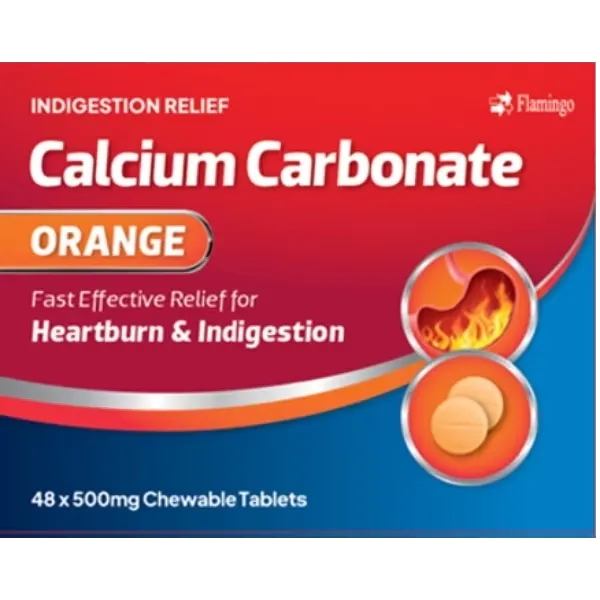
Do not take Calcium Carbonate 500mg Chewable Tablets if you:
- Have severe kidney disease.
- Have high calcium in the urine or kidney stones.
- Have high calcium or low phosphate levels in the blood.
- Are allergic (hypersensitive) to any of the ingredients (listed in Section 6).
Warning and precautions:
- Do not exceed the stated dose.
- This tablet should not be used for more than 14 days without consulting a doctor.
- Please consult your doctor or pharmacist if you have mild or moderate kidney problems as regular blood tests should be carried out.
Other medicines and Calcium Carbonate 500mg Chewable Tablets:
Please tell your doctor or pharmacist if you are taking or have recently taken any other medicines, including medicines obtained without a prescription. If you are taking any of the following medicines speak to your doctor or pharmacist before taking this tablet because it can affect how these medicines work:
- Tetracyclines and quinolones (antibiotics)
- Bisphosphonates (used for the treatment of osteoporosis)
- Dolutegravir (an anti-retroviral medicine used for the treatment of HIV infection)
- Levothyroxine (a thyroid hormone)
- Eltrombopag (used to increase the number of platelets)
- Digoxin (used for some heart conditions)
- Thiazide diuretics (water tablets to treat fluid retention and high blood pressure)
- Fluorides (for preventing dental caries)
- Phosphates (for clearing the bowel before a surgical procedure)
- Iron supplements
To maximise the benefit of all medicines being used, take this tablet at least 4 hours before or after taking eltrombopag and 1 to 2 hours after taking any other medicines.
Calcium Carbonate 500mg Chewable Tablets with food and drink:
Avoid taking this tablet with large amounts of milk or dairy products.
Pregnancy, breastfeeding:
Calcium Carbonate 500mg Chewable Tablets can be used during pregnancy and breastfeeding if taken as instructed. As this tablet provides a substantial amount of calcium in addition to dietary calcium intake, pregnant women should strictly limit their use of this tablet to the maximum recommended daily dose and avoid concomitant, excessive intake of milk (1 litre contains up to 1.2 g elemental calcium) and dairy products.
Calcium Carbonate 500mg Chewable Tablets contains sucrose:
This product contains sucrose. If you have been told by your doctor that you have an intolerance to some sugars, contact your doctor before taking this medicinal product. May be harmful to the teeth.
Possible side effects:
Like all medicines, this medicine can cause side effects, although not everybody gets them. Side effects are unlikely at the recommended dose. If you experience the following side effects stop treatment immediately and seek medical advice.
- Rarely allergic reactions to ingredients have been reported, e.g. rashes, itching, difficulty in breathing and swelling of the face, mouth or throat and anaphylactic shock (anaphylactic shock is a severe sudden allergic reaction, symptoms of which are low blood pressure, shock, palpitations, difficulty in breathing, bronchospasm, skin reactions, abdominal pain or cramps, vomiting and diarrhoea).
- Long term use of high doses can cause high blood levels of calcium especially in people with kidney conditions. Symptoms of this may include nausea, vomiting, upset stomach, constipation, diarrhoea, tiredness, muscular weakness, headache, kidney problems and impaired sense of taste.
- In exceptional cases, long term use of high doses can lead to milk alkali syndrome, which can cause high blood levels of calcium.
Reporting side effects:
If you get any side effects, talk to your doctor, pharmacist or nurse. This includes any possible side effects not listed in this leaflet. You can also report side effects directly via the Yellow Card Scheme at www.mhra.gov.uk/yellowcard or search for MHRA Yellow Card in the Google Play or Apple App Store. By reporting side effects, you can help provide more information on the safety of this medicine.
How to store Calcium Carbonate 500mg Chewable Tablets:
- Keep this medicine out of the sight and reach of children.
- Do not store above 25°C. Store in original package in order to protect from moisture.
- Do not use this medicine after the expiry date which is stated on the label after EXP. The expiry date refers to the last day of that month.
- Do not throw away any medicines via wastewater or household waste. Ask your pharmacist how to throw away medicines you no longer use. These measures will help to protect the environment.