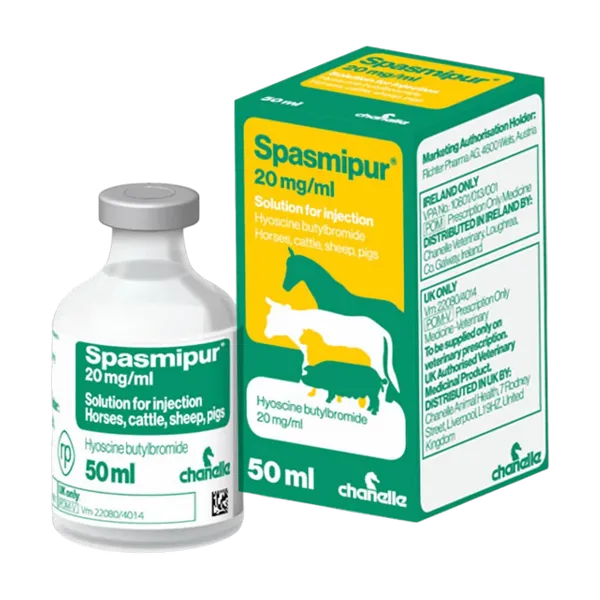
Before use
Do not use:
- in case of paralytic ileus, mechanical obstruction, or cardiac disorders.
- in cases of hypersensitivity to the active substance or to any of the excipients.
- in horses with glaucoma.
- in horses less than 6 weeks of age.
Special precautions for use in animals: Horses should be monitored carefully following treatment. The treatment is essentially symptomatic and an appropriate handling of the underlying disorder is necessary.
Precautions for the person giving the injection:
- People with known hypersensitivity to hyoscine butylbromide or benzyl alcohol should avoid contact with the veterinary medicinal product.
- Accidental self-injection may result in cardiac and circulatory effects. Avoid accidental self-injection. In case of accidental self-injection, seek medical advice immediately and show the package leaflet or the label to the physician.
- The veterinary medicinal product can cause skin and eye irritation. Avoid contact with skin and eyes. In the case of contact with skin, wash with soap and water. If irritation persists, seek medical advice. Wash hands after use.
- If the veterinary medicinal product comes into contact with the eyes, rinse the eyes immediately with plenty of water and seek medical attention if irritation persists.
Pregnancy and lactation: Laboratory studies in mice have not produced any evidence of teratogenic effects. No information on use during pregnancy in the target species is available. An effect upon the smooth muscles of the birth canal can occur. Hyoscine butylbromide, like all other anticholinergic agents, can inhibit the production of milk. Due to its low solubility in fat, excretion of hyoscine butylbromide in milk is very low. Use only according to the benefit-risk assessment by the responsible veterinarian.
Interactions: This veterinary medicinal product may enhance the tachycardic effects of beta-adrenergic drugs and may alter the effect of other drugs, such as digoxin. The effects of hyoscine butylbromide may be potentiated by the concomitant use of other anticholinergic drugs. Co-administration with other anticholinergic or parasympatholytic drugs should be avoided.
Withdrawal periods: Meat and offal: horses 3 days, cattle 2 days, sheep 18 days, pigs 9 days. Milk: horses, cattle and sheep 12 hours.
Adverse events and overdose
Horses: Very rare (less than 1 animal in 10,000 animals treated, including isolated reports): tachycardia. Undetermined frequency (cannot be estimated from the available data): colic, due to inhibition of motility.
Cattle, sheep, pigs: Very rare (less than 1 animal in 10,000 animals treated, including isolated reports): tachycardia.
Reporting adverse events is important. It allows continuous safety monitoring of a veterinary medicinal product. Reports should be sent, preferably via a veterinarian, to either the marketing authorisation holder or its local representative or the national competent authority via the national reporting system.
Overdose: In case of overdose, anticholinergic symptoms, such as urinary retention, thirst, tachycardia, inhibition of gastrointestinal motility and transient visual disturbances may occur. If necessary, parasympathomimetic drugs can be administered. In addition, appropriate supportive measures should be used as required.
Storage and disposal
- This veterinary medicinal product does not require any special storage conditions. After first opening the immediate packaging, do not store above 25°C.
- Shelf life after first opening the immediate packaging: 28 days.
- Medicines should not be disposed of via wastewater or household waste. Use take-back schemes for the disposal of any unused veterinary medicinal product or waste materials derived thereof in accordance with local requirements and with any national collection systems applicable to the veterinary medicinal product concerned.