![Do Pets Need Prescriptions? [Full Q&A about Pet Meds]](https://d2i5j94z9qxt5a.cloudfront.net/eyJidWNrZXQiOiJ3ZWxkcmlja3MtY2RuIiwia2V5IjoiZ3VpZGVzLzQ5Ny9LaFNtcEdpQjZ3c2VJTGRJdlhKb21HdGt4OWFHVTlETmZtN1BiSG1SLmpwZyIsImVkaXRzIjp7InJlc2l6ZSI6eyJ3aWR0aCI6NDYwLCJoZWlnaHQiOjIxNSwiZml0IjoiY292ZXIiLCJiYWNrZ3JvdW5kIjp7InIiOjI1NSwiZyI6MjU1LCJiIjoyNTUsImFscGhhIjowfX0sIndlYnAiOnsicXVhbGl0eSI6ODB9fX0=)
External content warning: this link will take you to a third party website.
We cannot guarantee the Patient Information Leaflet is accurate and is for reference only.
Veterinary prescription only : our pharmacists check every order before dispatch.
You need a VET Prescription to purchase this item.
Typically dispatched within 3-5 working days. Delivery details
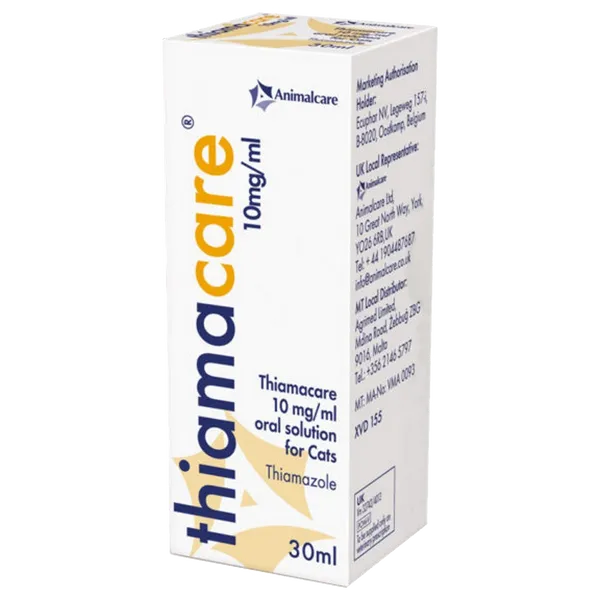
Thiamacare 10mg/ml Oral Solution for Cats 30ml is a veterinary medicinal product, available only with a vet prescription, designed to help manage feline hyperthyroidism. Containing 10 mg/ml of the active substance Thiamazole, this oral solution assists in stabilising your cat's thyroid function.
Regular monitoring by your veterinary surgeon is crucial. This includes periodic blood tests to check haematology (blood cell counts), biochemistry, and thyroid hormone levels (total T4). Your vet will adjust the dosage based on these results and your cat's clinical response. Watch for any changes in your cat's behaviour, appetite, or general well-being.
No, Thiamacare 10mg/ml Oral Solution for Cats 30ml should be administered directly into your cat's mouth. Giving it with food can interfere with its effectiveness and is not recommended.
External content warning: this link will take you to a third party website.
We cannot guarantee the Patient Information Leaflet is accurate and is for reference only.
Follow these simple steps
Get a prescription from your Doctor or Vet.
Place your order with us.
Add a pet and upload a prescription.
Our pharmacists will double-check your order & once approved, your order will be dispatched.