Do not give your child this medicine if:
- S/he has ever had a bad reaction to any of the ingredients.
- S/he is taking anything else with paracetamol in it.
- S/he weighs less than 4 kg.
- S/he was born early (before 37 weeks).
If any of these apply, get advice from a doctor or pharmacist without using Calpol.
Talk to your doctor or pharmacist if:
- Your child has serious kidney or liver problems.
- Your child has an inherited intolerance to fructose or has been diagnosed with an intolerance to some other sugars.
- During treatment, tell your doctor straight away if you have severe illnesses, including severe renal impairment or sepsis, or suffer from malnutrition, chronic alcoholism or if you are also taking flucloxacillin (an antibiotic). Symptoms of metabolic acidosis (serious breathing difficulties with deep rapid breathing, drowsiness, feeling sick, and being sick) have been reported in these situations.
- Your child is taking any other medicines, including: metoclopramide or domperidone (for nausea and vomiting), cholestyramine (for high cholesterol), anticoagulants (like warfarin), anticonvulsants (for epilepsy), or flucloxacillin (antibiotic).
If you are not sure about the medicine your child is taking, show the bottle or pack to your pharmacist.
If adults take this medicine (additional warnings):
- You can use this medicine while taking oral contraceptives ('the pill'), but it may not work as well on your pain or fever.
- If you drink large amounts of alcohol, you may be more open to the side-effects of paracetamol. Talk to a doctor before use.
- If necessary, the medicine can be used during pregnancy. Use the lowest possible dose for the shortest time. Contact your doctor or pharmacist if pain/fever isn't reduced or if you need to take it more often.
- Ask your doctor or pharmacist for advice before taking this medicine if you are breastfeeding.
Some of the ingredients can cause problems:
- Methyl (E218), propyl (E216) and ethyl (E214) parahydroxybenzoate may cause allergic reactions which could possibly be delayed.
- The sorbitol (E420) and maltitol content means this product is unsuitable for people with inherited intolerance to fructose. Sorbitol may cause gastrointestinal discomfort and a mild laxative effect. Maltitol may also have a mild laxative effect.
- Carmoisine (E122) may cause allergic reactions.
- This medicine contains less than 1 mmol sodium (23 mg) per 5 ml, meaning it is essentially 'sodium-free'.
- This medicine contains 14.32 mg propylene glycol (E1520) in each 5 ml dose.
- This medicine contains 0.16 mg benzyl alcohol in each 5 ml. Benzyl alcohol may cause allergic reactions. Ask your doctor or pharmacist for advice if you are pregnant or breastfeeding, or if you have a liver or kidney disease, due to the risk of large amounts building up and causing side effects (metabolic acidosis).
Speak to your doctor immediately if:
- Your baby needs more than the doses shown in the table, or if fever doesn't go away.
- You are not sure of the cause of your child's illness or it is accompanied by a rash, breathing difficulties, diarrhoea or excessive tiredness or lethargy. Do not give Calpol until you get medical advice.
Immediate medical advice should be sought in the event of an overdose, even if the child seems well, because of the risk of delayed, serious liver damage.
Possible Side-Effects:
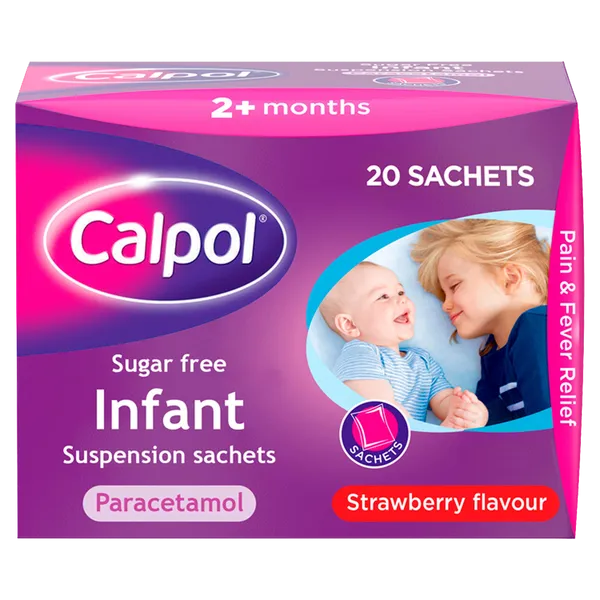
Calpol Infant Suspension Sachets can have side-effects, like all medicines, although these don’t affect everyone and are usually mild. Tell your doctor as soon as possible if you notice any of these:
- Allergic reactions, including swelling of the face, tongue or throat, difficulty swallowing, unexplained wheezing, shortness of breath, rash or hives.
- Becoming unusually tired, unexpected bruising or bleeding, and getting more infections (such as colds) than usual. These are very rare effects in people taking paracetamol.
- Very rare cases of serious skin reactions have been reported (skin reddening, blisters, rash). Stop use and seek medical help right away if skin reactions occur or worsen.
- A serious condition that can make blood more acidic (metabolic acidosis), in patients with severe illness using paracetamol (frequency "not known").
If your child shows any of these signs, stop giving paracetamol and talk to a doctor right away.
Long term use: People who use medicines containing paracetamol every day for a long time (several months or more) could get certain side-effects, including liver and kidney damage. People taking paracetamol in the usual way for shorter periods have not had these problems, but liver function tests may be affected. If you notice any side-effects not included in this leaflet, please tell your doctor or pharmacist.
If you get any side-effects, talk to your doctor, pharmacist or nurse. This includes any possible side-effects not listed in this leaflet. You can also report side-effects directly via the Yellow Card Scheme at: http://www.mhra.gov.uk/yellowcard or search for MHRA Yellow Card in app stores.
Storage:
- Keep this medicine out of the sight and reach of children.
- Do not store above 25°C.
- Keep sachets in the outer carton.
- Do not use after the end of the month shown as an expiry date on the packaging.
- Do not throw away any medicines via wastewater or household waste. Ask your pharmacist how to throw away medicines you no longer use. These measures will help protect the environment.


![Common Cold: Symptoms, Treatments & Prevention [Full Guide]](https://d2i5j94z9qxt5a.cloudfront.net/eyJidWNrZXQiOiJ3ZWxkcmlja3MtY2RuIiwia2V5IjoiZ3VpZGVzLzQ2OC9haExxZTNlSHA0OXVWTjk0cTc4aEplN2dwajNvZU1SbEFjdUZpUGRlLmpwZyIsImVkaXRzIjp7InJlc2l6ZSI6eyJ3aWR0aCI6NDYwLCJoZWlnaHQiOjIxNSwiZml0IjoiY292ZXIiLCJiYWNrZ3JvdW5kIjp7InIiOjI1NSwiZyI6MjU1LCJiIjoyNTUsImFscGhhIjowfX0sIndlYnAiOnsicXVhbGl0eSI6ODB9fX0=)