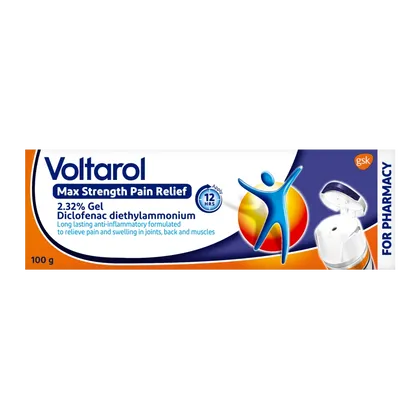
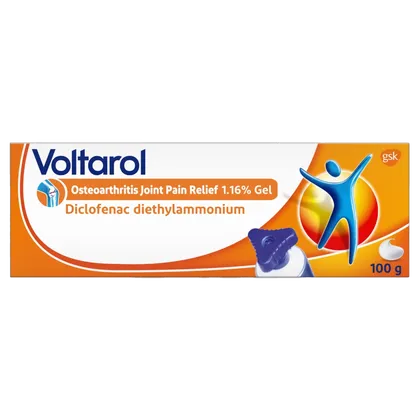
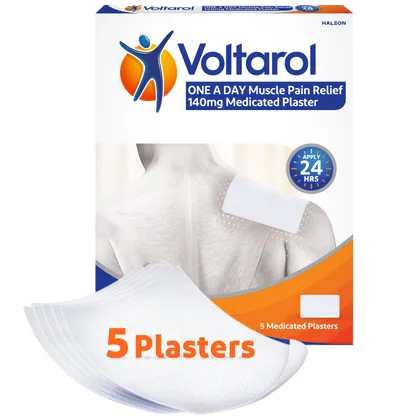
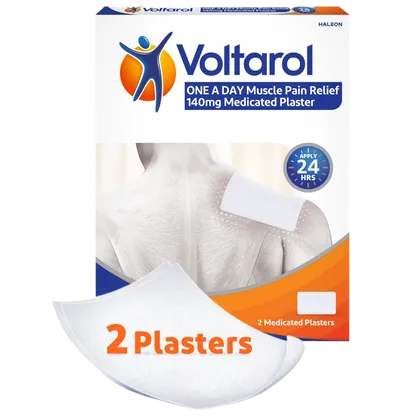
Voltarol contains diclofenac, a non-steroidal anti-inflammatory drug (NSAID) that relieves pain and reduces inflammation, mainly by blocking the production of prostaglandins. Voltarol gels and plasters are applied to the skin over the painful area, and only a small amount of diclofenac is absorbed into the rest of the body. Voltarol gels contain diclofenac diethylammonium and Voltarol One a Day plasters contain diclofenac sodium.
No. Voltarol contains diclofenac, not ibuprofen. Both are non-steroidal anti-inflammatory drugs (NSAIDs). Don't use Voltarol One a Day plasters at the same time as ibuprofen or any other NSAID, whether it's applied to the skin or taken by mouth. With Voltarol gel, there's an increased possibility of side effects if you're also using another medicine containing diclofenac or an NSAID such as ibuprofen or aspirin, so ask your pharmacist first. Don't use Voltarol if you've ever had an allergic reaction to ibuprofen, aspirin or another medicine used to treat pain, fever or inflammation.
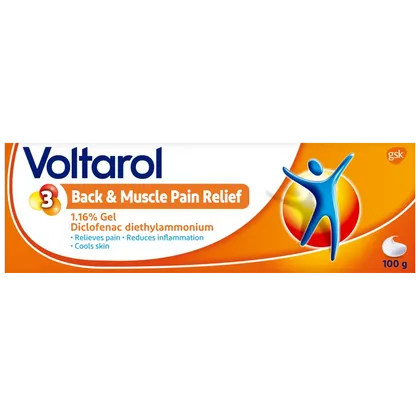
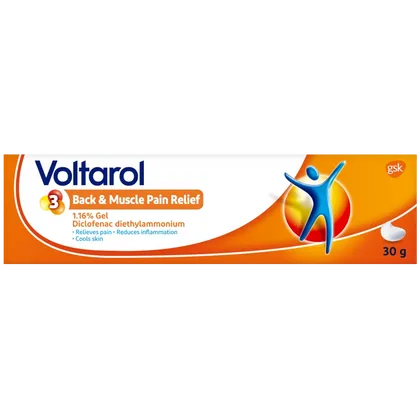
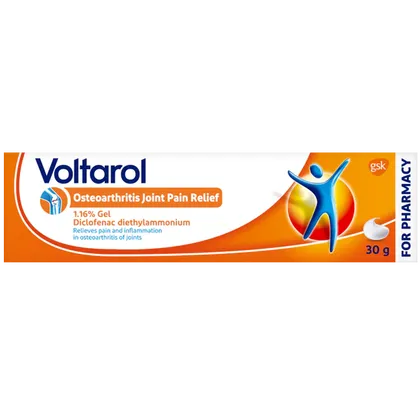
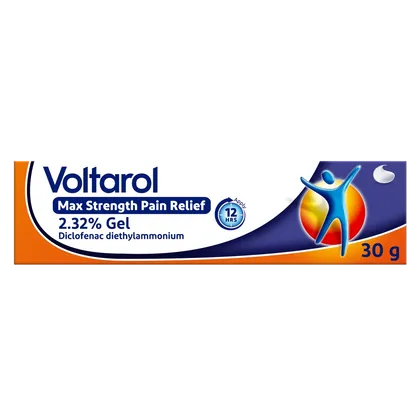
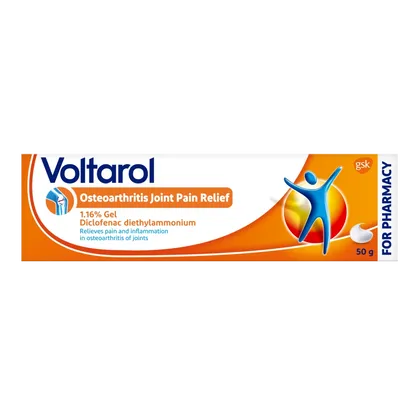
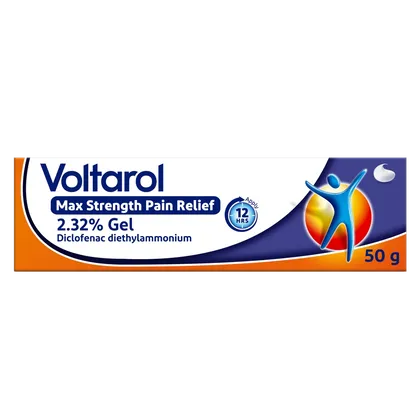
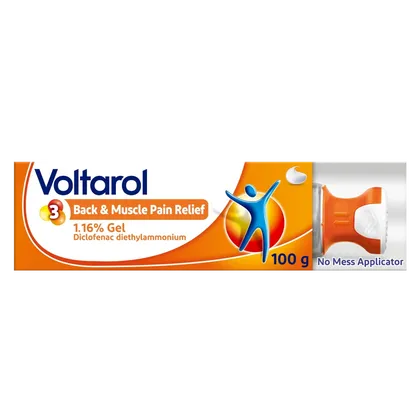
Voltarol Max Strength Pain Relief 2.32% Gel contains 2.32g of diclofenac diethylammonium in every 100g, twice the amount in the 1.16% gels, and is applied 2 times a day, preferably morning and evening. Voltarol 1.16% gels are applied 3 to 4 times a day. Voltarol Max Strength 2.32% Gel and Voltarol Osteoarthritis Joint Pain Relief 1.16% Gel are also licensed for the pain of non-serious arthritic conditions; Voltarol Back and Muscle Pain Relief 1.16% Gel is not.
For arthritis pain, you may need to apply Voltarol Osteoarthritis Joint Pain Relief 1.16% Gel for up to 7 days to allow its effect to build up on the joint before you notice an improvement. With any Voltarol gel, speak to a doctor if your symptoms haven't improved after 7 days or get worse.
Don't use Voltarol if you've ever had an allergic reaction to diclofenac, aspirin, ibuprofen or other medicines used to treat pain, fever or inflammation, or to any of the other ingredients. Signs of an allergic reaction can include asthma, wheezing or shortness of breath, a skin rash or hives, swelling of the face or tongue, or a runny nose. Don't use Voltarol in the last 3 months of pregnancy. Voltarol gels aren't recommended for children under 14 years, and Voltarol One a Day plasters aren't for children or adolescents under 16. Don't use Voltarol Osteoarthritis Joint Pain Relief 1.16% Gel or Voltarol Max Strength 2.32% Gel if you have severe joint pain that started recently and isn't related to an injury or overuse, or if you feel ill, have a temperature or any other symptoms along with the pain. Don't use Voltarol One a Day plasters if you have an active stomach or duodenal ulcer, on injured, infected or inflamed skin or eczema, or at the same time as another NSAID. If you have or have ever had asthma or a stomach or duodenal ulcer, speak to your doctor or pharmacist before using Voltarol. Talk to them before using Voltarol One a Day plasters too if you have allergies, kidney, heart or liver problems, bowel inflammation or a tendency to bleed.
Voltarol gel works where you apply it, and only a small amount of diclofenac reaches the rest of the body, so interactions with other medicines are very unlikely and none are known for the gel. If you take paracetamol or any other medicine regularly, check with your pharmacist that Voltarol gel is suitable for you.
Don't use Voltarol in the last 3 months of pregnancy. In the first 6 months of pregnancy, or if you're planning a baby, use Voltarol only after talking to your doctor, and keep the amount used as low and the treatment as short as possible. If you're breastfeeding, talk to your doctor before using Voltarol, and don't apply Voltarol gel to your breasts, to large areas of skin or for a long time.