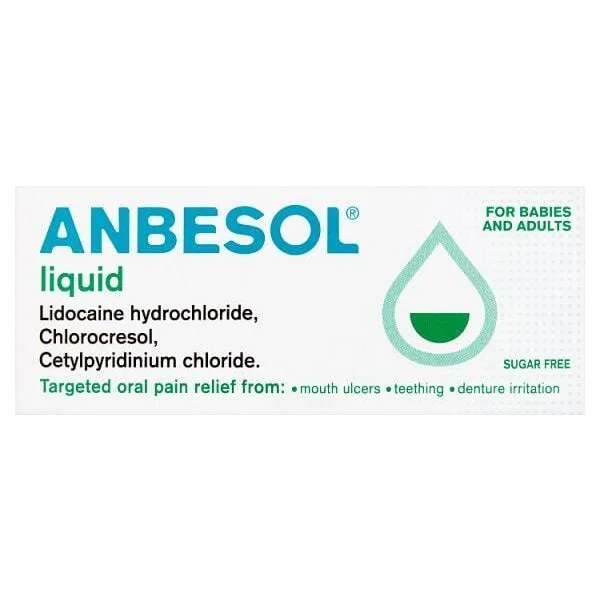
If you still have symptoms after 7 days, consult your doctor or dentist.
- Do not use this product if you have a history of allergy to local anaesthetics such as procaine, butacaine or benzocaine or any other ingredients in this product.
- Do not exceed the stated dose.
- Keep out of the sight and reach of children.
- Do not use more Anbesol Oral Liquid than recommended as this may result in the active ingredients being absorbed into the body causing serious side effects, such as convulsions (fits).
Warnings and precautions:
- Talk to your doctor or pharmacist before using Anbesol Oral Liquid if you have open wounds or damaged areas in the lining of your mouth, as this may result in too much of the active ingredients being absorbed.
- If symptoms continue for more than 7 days or recur frequently, speak to your pharmacist, doctor or dentist.
- If your child's symptoms worsen, do not improve after 7 days of treatment or you are concerned that your child is unwell, talk to a health care professional.
- Do not use for more than 7 days for each teething episode.
- Stop treatment when your child's symptoms settle.
- Always take this medicine exactly as described in this leaflet or as your doctor or pharmacist has told you to. Do not give more medicine than the label tells you to.
- You should check with your doctor or pharmacist if you are not sure.
Do not use Anbesol Liquid:
- If your child is under 5 months old.
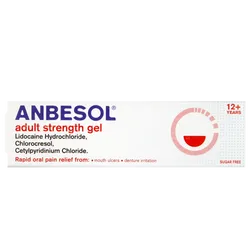
- At the same time as other products containing lidocaine.
- If you have porphyria (a disease which causes stomach pain, constipation, changes in the colour of urine, skin rashes and disturbed behaviour).
Other medicines and Anbesol Liquid:
Tell your doctor or pharmacist if you are taking, have recently taken or might take any of the following medicines as they may interfere with Anbesol Oral Liquid:
- Other anaesthetics or medicines similar to lidocaine for example antiarrhythmic drugs such as mexiletine (used to control abnormal heartbeats).
- Erythromycin (a type of antibiotic used to treat bacterial infections).
- Itraconazole (a type of antifungal medicine used to treat fungal infections).
- Antiarrhythmic drugs such as amiodarone (used to control abnormal heartbeats).
- Cimetidine (used to treat stomach ulcers or heartburn).
- Beta-blockers (used to treat heart conditions, high blood pressure or migraine).
- Calcium chloride (used for the treatment of hypocalcaemia or as a food additive).
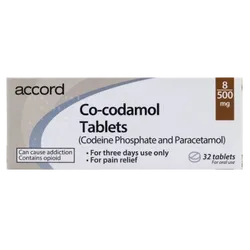
- Codeine phosphate (used to treat pain, diarrhoea or relieve coughs).
- Diamorphine hydrochloride (a painkiller used to treat severe pain).
- Papaveretum (used to treat moderate to severe pain and to calm you before an operation).
- Quinine hydrochloride (used to treat malaria or leg cramps).
- Methylcellulose (used to treat constipation).
- Non-ionic surfactants such as Cetomacrogol 1000 and polysorbate 80 (used in medicines, foods and cosmetics).
Pregnancy, fertility and breast-feeding:
If you are pregnant, breast-feeding, think you may be pregnant or are planning to have a baby, ask your doctor or pharmacist for advice before using this medicine. If you are breast-feeding, small amounts of the active ingredient lidocaine will pass into your breast milk but in such small quantities that it should not harm your baby if this medicine is used as directed.
PLEASE READ ALL PRODUCT PACKAGING AND LABELS PRIOR TO USE.